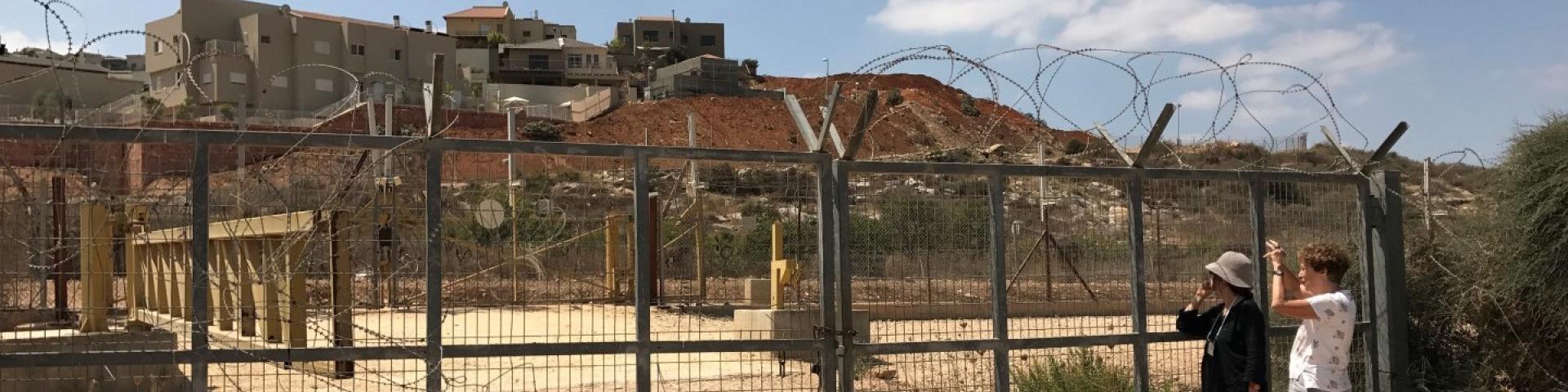
|
Mon, 28 Aug 2023 |
Aanin checkpoint: closed! And will only open twice a year!!! |
|
Thu, 3 Aug 2023 |
Barta`a checkpoint: the morning crossing is crowded again |
|
Mon, 24 Jul 2023 |
Aanin checkpoint: before and after the wall (photos) |
|
Thu, 13 Jul 2023 |
Barta`a checkpoint: Life goes on. The important thing is to earn a living. |
|
Sun, 21 May 2023 |
The residents of Kafr 'Aqab fall between the chairs |
|
Wed, 22 Mar 2023 |
Aanin checkpoint: returned home with the backing of the High Court (!) |
|
Wed, 15 Mar 2023 |
Barta`a checkpoint: the management denies |
|
Sun, 29 Jan 2023 |
Barta’a Checkpoint: The Hijab (women’s head cover) is against Men’s Photos |
|
Thu, 29 Dec 2022 |
Checkpoint in Ratea: let us work. If not, Hamas will come |
|
Tue, 17 Jan 2023 |
A shooting incident in the Shaked settlement |
|
Wed, 25 Jan 2023 |
Barta'a checkpoint: It Girl with a hijab |
|
Thu, 12 Jan 2023 |
Barta`a Checkpoint: complaints about overcrowding in the morning continue |
|
Wed, 11 Jan 2023 |
Barta`a checkpoint: Switzerland is here |
|
Wed, 7 Dec 2022 |
Barta`a checkpoint: violation of women's dignity |
|
Wed, 14 Dec 2022 |
Aanin checkpoint: opened two hours late! |
|
Wed, 23 Nov 2022 |
Checkpoint in Ratea: "Open early at four in the morning!" |
|
Wed, 2 Nov 2022 |
Very crowded at the Barta`a checkpoint every morning |
|
Wed, 30 Nov 2022 |
Under the sky of the occupation at the Aanin checkpoint |
|
Thu, 17 Nov 2022 |
Shouting at the Aanin checkpoint |
|
Tue, 8 Nov 2022 |
The northern chekpoints: rain clouds over the occupation |
|
Wed, 9 Nov 2022 |
Barta`a chekpoint: severe overcrowding in the mornings |
|
Tue, 26 Jul 2022 |
Barta'a checkpoint: heavy crowding at opening |
|
Wed, 20 Jul 2022 |
Sansana (Meitar CP) - crowding at the checkpoint |
|
Wed, 6 Jul 2022 |
Anin checkpoint: A settler from Ariel attacks an Israeli citizen |
|
Sun, 3 Jul 2022 |
Bethlehem CP - violence of policemen against MachsomWatch members |
|
Wed, 1 Jun 2022 |
Barta'a checkpoint: very crowded and stuck in the mornings |
|
Mon, 23 May 2022 |
Barta'a checkpoint: Crossing in the morning is very difficult |
|
|
The old scenes have returned to the checkpoints |
|
Tue, 19 Apr 2022 |
Northern checkpoints: The crossing is through the checkpoints once again |
|
Tue, 12 Apr 2022 |
Barta'a-Reihan checkpoint in the morning - terrible overcrowding, pushing, shouting |
|
Fri, 21 Jan 2022 |
Qalandiya - Friday Shift |
|
Mon, 4 Oct 2021 |
Only one parched Olive tree at the Olive Checkpoint |
|
Tue, 14 Sep 2021 |
A tour of the checkpoints in central and southern Jerusalem |
|
Wed, 1 Sep 2021 |
Qalandiya - Frustrating wait at the checkpoint for vehicles and on foot |
|
Mon, 23 Nov 2020 |
Qalandiya - long lines. Only some of the checking posts are active |
|
Wed, 11 Nov 2020 |
Qalandiya - only some of the checking posts are active and again there are long queues |
|
Mon, 31 Aug 2020 |
Palestinians have to renew permits at the Israeli DCO since the coordination with the PA stopped |
|
Sun, 28 Jun 2020 |
Qalandiya - again long queues at the entrance to the checkpoint |
|
Thu, 20 Feb 2020 |
Barta'a checkpoint: returned to being very active in the mornings |
|
Wed, 29 Jan 2020 |
Qalandiya - long queues again |
|
Mon, 11 Nov 2019 |
Anin: Shift commander attacks us with false pretenses |
|
Sun, 15 Sep 2019 |
North: It is difficult to describe the amount of crowding and helplessness of someone who requests to be extricated from there |
|
Mon, 19 Aug 2019 |
Etzion DCL: a 3-month-old baby is GSS prevented. Not yet investigated! |
|
Wed, 14 Aug 2019 |
Etzion DCL |
|
Mon, 5 Aug 2019 |
Etzion DCL: In August the occupation is not only cruel; it sweaty and smelly too. |
|
Fri, 31 May 2019 |
Qalandiya - 4th Friday of Ramadan |
|
Fri, 10 May 2019 |
Qalandiya - first Friday of Ramadan |
|
Tue, 26 Mar 2019 |
The renovated Bethlehem checkpoint opens on April 1. Truth or hoax? |
|
Mon, 18 Mar 2019 |
Barta'a checkpoint: a great achievement to the occupation! no more overcrowding in the mornings |
|
Sun, 10 Mar 2019 |
Irtah - a woman complained she was almost suffocated |
|
Wed, 13 Feb 2019 |
Qalandiya - crowding, shouting and pushing |
|
Tue, 19 Feb 2019 |
Qalandiya - Last shift at the old facility? |
|
Wed, 30 Jan 2019 |
Qalandiya - long queues and overcrowding force some of the Palestinians to bypass the inspection stations |
|
Wed, 23 Jan 2019 |
Qalandiya - The humanitarian gate opens with a typical delay |
|
Sun, 20 Jan 2019 |
Irtah - A woman leaves home at 02:00 so as not to be delayed at the checkpoint |
|
Mon, 14 Jan 2019 |
Qalandiya - There was no movement in the sleeves and no progress through the three pens - the soldier at the inspection booth fell asleep |
|
Sun, 6 Jan 2019 |
Bitterly cold and slow at Qalandiya checkpoint |
|
Wed, 2 Jan 2019 |
Qalandiya - crowding and congestion, long lines in freezing cold |
|
Sun, 30 Dec 2018 |
South Hebron Hills - on Sunday there is tremendous pressure at the checkpoint |
|
Wed, 21 Nov 2018 |
Qalandiya. The humanitarian gate opened late and closed before all those in need were through |
|
Tue, 22 May 2018 |
Qalandiya, Ramadan, crowding, slow passage, anger and despair |
|
Sun, 6 May 2018 |
Qalandiya - Long queues, crowded cages and exhausted people |
|
Sun, 29 Apr 2018 |
Irtah (Sha'ar Efrayim) |
|
Mon, 16 Apr 2018 |
Qalandiya |
|
Tue, 27 Mar 2018 |
Qalandiya |
|
Wed, 7 Mar 2018 |
Qalandiya |
|
Tue, 6 Mar 2018 |
Qalandiya - long lines, anger, nervousness and frustration |
|
Tue, 6 Feb 2018 |
Qalandiya |
|
Sun, 4 Feb 2018 |
Irtah (Sha'ar Efrayim) |
|
Sun, 31 Dec 2017 |
Irtah (Sha'ar Efrayim) |
|
Sun, 26 Nov 2017 |
Northern Checkpoint: 50 kilograms of olives on the back |
|
Sun, 26 Nov 2017 |
Irtah (Sha'ar Efrayim) |
|
Tue, 24 Oct 2017 |
Qalandiya |
|
Thu, 2 Nov 2017 |
Qalandiya |
|
Sun, 29 Oct 2017 |
Qalandiya |
|
Wed, 18 Oct 2017 |
A difficult morning at Qalandiya. |
|
Wed, 11 Oct 2017 |
There are sufficient permits for our servants. Not for landowners! |
|
Sun, 1 Oct 2017 |
Qalandiya should be called Balagandiya |
|
Mon, 18 Sep 2017 |
Qalandiya - A very slow, crowded morning. |
|
Thu, 17 Aug 2017 |
'Anin, Barta'a-Reihan, Tayba-Rummana, Tura-Shaked |
|
Tue, 8 Aug 2017 |
Qalandiya |
|
Tue, 8 Aug 2017 |
Crowded atmosphere and violence at Qalandiya checkpoint |
|
Mon, 17 Jul 2017 |
'Anin, Barta'a-Reihan, Tura-Shaked |
|
Wed, 19 Jul 2017 |
Qalandiya |
|
Sun, 11 Jun 2017 |
Touring shift at the Eyal and Habla checkpoints with the members of the JCALL group, mainly from France |
|
Fri, 16 Jun 2017 |
Qalandiya - Third Friday of Ramadan |
|
Fri, 12 May 2017 |
Qalandiya - filthy and noisy |
|
Sun, 14 May 2017 |
Qalandiya |
|
Wed, 10 May 2017 |
Qalandiya |
|
Thu, 27 Apr 2017 |
Barta'a-Reihan, Tayba-Rummana, Tura-Shaked |
|
Mon, 20 Mar 2017 |
Eyal Crossing |
|
Tue, 21 Mar 2017 |
Qalandiya |
|
Wed, 15 Mar 2017 |
Qalandiya |
|
Thu, 16 Mar 2017 |
'Anin, Barta'a-Reihan, Tayba-Rummana, Tura-Shaked |
|
Sun, 19 Feb 2017 |
Eyal Crossing |
|
Tue, 21 Feb 2017 |
Qalandiya |
|
Tue, 7 Feb 2017 |
Qalandiya |
|
Fri, 20 Jan 2017 |
Qalandiya |
|
Wed, 25 Jan 2017 |
Qalandiya |
|
Wed, 18 Jan 2017 |
Qalandiya |
|
Sun, 18 Dec 2016 |
Barta'a-Reihan, Tura-Shaked |
|
Wed, 7 Dec 2016 |
Qalandiya |
|
Tue, 6 Dec 2016 |
Qalandiya |
|
Wed, 16 Nov 2016 |
Qalandiya |
|
Tue, 15 Nov 2016 |
Qalandiya |
|
Tue, 8 Nov 2016 |
Qalandiya |
|
Mon, 7 Nov 2016 |
Qalandiya |
|
Wed, 9 Nov 2016 |
Qalandiya |
|
Sun, 30 Oct 2016 |
Hashmonaim (Ni'ilin), Makkabim (Beit Sira) |
|
Wed, 31 Aug 2016 |
Qalandiya |
|
Mon, 29 Aug 2016 |
Bethlehem (300) |
|
Thu, 25 Aug 2016 |
Bethlehem (300) |
|
Sun, 3 Jul 2016 |
Qalandiya |
|
Fri, 1 Jul 2016 |
Qalandiya |
|
Sun, 15 May 2016 |
Barta'a-Reihan, Tura-Shaked |
|
Wed, 1 Jun 2016 |
קלנדיה |
|
Wed, 25 May 2016 |
Qalandiya |
|
Thu, 5 May 2016 |
'Anin, Barta'a-Reihan, Tayba-Rummana, Tura-Shaked |
|
Sun, 17 Apr 2016 |
Irtah (Sha'ar Efrayim) |
|
Sun, 17 Apr 2016 |
Qalandiya |
|
Tue, 12 Apr 2016 |
Qalandiya |
|
Thu, 7 Apr 2016 |
'Anin, Barta'a-Reihan, Tayba-Rummana, Tura-Shaked |
|
Wed, 6 Apr 2016 |
Irtah (Sha'ar Efrayim) |
|
Wed, 16 Mar 2016 |
Qalandiya |
|
Sun, 13 Mar 2016 |
Hashmonaim (Ni'ilin) |
|
Wed, 9 Mar 2016 |
Qalandiya |
|
Sun, 6 Mar 2016 |
Barta'a-Reihan, Tura-Shaked |
|
Tue, 1 Mar 2016 |
Qalandiya |
|
Mon, 29 Feb 2016 |
Qalandiya |
|
Sun, 28 Feb 2016 |
Barta'a-Reihan, Tura-Shaked |
|
Sun, 28 Feb 2016 |
Jaba (Lil), Qalandiya |
|
Wed, 24 Feb 2016 |
Qalandiya |
|
Sun, 21 Feb 2016 |
Irtah (Sha'ar Efrayim) |
|
Sun, 21 Feb 2016 |
Jaba (Lil) |
|
Tue, 16 Feb 2016 |
Qalandiya |
|
Sun, 14 Feb 2016 |
Qalandiya |
|
Sun, 14 Feb 2016 |
Qalandiya |
|
Sun, 14 Feb 2016 |
Hashmonaim (Ni'ilin), Makkabim (Beit Sira) |
|
Mon, 8 Feb 2016 |
Eyal Crossing, Irtah (Sha'ar Efrayim) |
|
Wed, 3 Feb 2016 |
Irtah (Sha'ar Efrayim) |
|
Sun, 31 Jan 2016 |
Eyal Crossing, Habla, Irtah (Sha'ar Efrayim) |
|
Wed, 13 Jan 2016 |
Irtah (Sha'ar Efrayim) |
|
Sun, 3 Jan 2016 |
Qalandiya |
|
Wed, 30 Dec 2015 |
Qalandiya |
|
Wed, 16 Dec 2015 |
'Anata-Shu'afat, Qalandiya |
|
Sun, 6 Dec 2015 |
Irtah (Sha'ar Efrayim) |
|
Wed, 2 Dec 2015 |
Qalandiya |
|
Sun, 29 Nov 2015 |
'Anata-Shu'afat, Qalandiya |
|
Sun, 8 Nov 2015 |
Habla, Irtah (Sha'ar Efrayim) |
|
Wed, 28 Oct 2015 |
Qalandiya |
|
Sun, 25 Oct 2015 |
Irtah (Sha'ar Efrayim) |
|
Mon, 17 Aug 2015 |
Qalandiya |
|
Sun, 9 Aug 2015 |
Qalandiya |
|
Tue, 4 Aug 2015 |
Qalandiya |
|
Wed, 29 Jul 2015 |
Qalandiya |
|
Sun, 26 Jul 2015 |
Irtah (Sha'ar Efrayim) |
|
Sun, 12 Jul 2015 |
Habla, Irtah (Sha'ar Efrayim) |
|
Thu, 9 Jul 2015 |
Qalandiya |
|
Sun, 5 Jul 2015 |
Qalandiya |
|
Sun, 28 Jun 2015 |
Bethlehem (300) |
|
Fri, 26 Jun 2015 |
Irtah (Sha'ar Efrayim) |
|
Wed, 10 Jun 2015 |
Qalandiya |
|
Sun, 31 May 2015 |
Irtah (Sha'ar Efrayim) |
|
Tue, 19 May 2015 |
Qalandiya |
|
Sun, 17 May 2015 |
Bethlehem (300), Etzion DCL |
|
Sun, 17 May 2015 |
Habla, Irtah (Sha'ar Efrayim) |
|
Thu, 14 May 2015 |
Qalandiya |
|
Wed, 13 May 2015 |
Qalandiya |
|
Sun, 3 May 2015 |
Al Jib (Givat Zeev), Qalandiya |
|
Fri, 1 May 2015 |
Qalandiya |
|
Thu, 30 Apr 2015 |
Qalandiya |
|
Wed, 29 Apr 2015 |
Qalandiya |
|
Sun, 26 Apr 2015 |
Qalandiya |
|
Fri, 17 Apr 2015 |
Bethlehem (300) |
|
Thu, 16 Apr 2015 |
Qalandiya |
|
Fri, 27 Mar 2015 |
Qalandiya |
|
Sun, 22 Mar 2015 |
Bethlehem (300), Etzion DCL |
|
Mon, 16 Mar 2015 |
Qalandiya |
|
Sun, 15 Mar 2015 |
Qalandiya |
|
Tue, 10 Mar 2015 |
Qalandiya |
|
Fri, 6 Mar 2015 |
Qalandiya |
|
Thu, 26 Feb 2015 |
Qalandiya |
|
Tue, 24 Feb 2015 |
Irtah (Sha'ar Efrayim) |
|
Sun, 22 Feb 2015 |
Irtah (Sha'ar Efrayim) |
|
Sun, 8 Feb 2015 |
Bethlehem (300), Etzion DCL |
|
Thu, 5 Feb 2015 |
Qalandiya |
|
Thu, 5 Feb 2015 |
'Anin, Barta'a-Reihan, Tayba-Rummana, Tura-Shaked |
|
Wed, 4 Feb 2015 |
Barta'a-Reihan, Tura-Shaked |
|
Wed, 4 Feb 2015 |
Qalandiya |
|
Wed, 4 Feb 2015 |
Irtah (Sha'ar Efrayim) |
|
Mon, 2 Feb 2015 |
Etzion DCL |
|
Sun, 1 Feb 2015 |
Irtah (Sha'ar Efrayim) |
|
Sun, 25 Jan 2015 |
Bethlehem (300), Etzion DCL |
|
Wed, 21 Jan 2015 |
Qalandiya |
|
Tue, 20 Jan 2015 |
Qalandiya |
|
Sun, 18 Jan 2015 |
Bethlehem (300) |
|
Mon, 12 Jan 2015 |
'Azzun 'Atma, Eliyahu Crossing, Habla |
|
Sun, 28 Dec 2014 |
Irtah (Sha'ar Efrayim) |
|
Fri, 26 Dec 2014 |
Qalandiya |
|
Wed, 24 Dec 2014 |
Irtah (Sha'ar Efrayim) |
|
Wed, 24 Dec 2014 |
Qalandiya |
|
Tue, 23 Dec 2014 |
Irtah (Sha'ar Efrayim) |
|
Sun, 21 Dec 2014 |
Qalandiya |
|
Thu, 18 Dec 2014 |
Qalandiya |
|
Wed, 10 Dec 2014 |
Qalandiya |
|
Mon, 8 Dec 2014 |
Hizma, Jaba (Lil), Qalandiya |
|
Sun, 7 Dec 2014 |
Bethlehem (300), Etzion DCL |
|
Sun, 7 Dec 2014 |
'Azzun, 'Izbet alTabib, Burin (Yitzhar), Irtah (Sha'ar Efrayim) |
|
Sun, 30 Nov 2014 |
Bethlehem (300), Etzion DCL |
|
Sun, 30 Nov 2014 |
Irtah (Sha'ar Efrayim) |
|
Sun, 30 Nov 2014 |
'Azzun 'Atma, 'Izbet alTabib, Eyal Crossing |
|
Mon, 24 Nov 2014 |
Qalandiya |
|
Fri, 21 Nov 2014 |
Irtah (Sha'ar Efrayim) |
|
Wed, 19 Nov 2014 |
'Azzun, 'Azzun 'Atma, Habla |
|
Tue, 18 Nov 2014 |
Bethlehem (300) |
|
Sun, 16 Nov 2014 |
Bethlehem (300), Etzion DCL |
|
Thu, 13 Nov 2014 |
Eyal Crossing, Irtah (Sha'ar Efrayim) |
|
Sun, 9 Nov 2014 |
Eyal Crossing |
|
Sat, 8 Nov 2014 |
Barta'a-Reihan, Tura-Shaked |
|
Sun, 2 Nov 2014 |
Irtah (Sha'ar Efrayim) |
|
Wed, 29 Oct 2014 |
Qalandiya |
|
Tue, 28 Oct 2014 |
Qalandiya |
|
Sun, 19 Oct 2014 |
Eyal Crossing, Irtah (Sha'ar Efrayim) |
|
Tue, 14 Oct 2014 |
Eyal Crossing, Irtah (Sha'ar Efrayim) |
|
Sun, 12 Oct 2014 |
Irtah (Sha'ar Efrayim) |
|
Thu, 2 Oct 2014 |
'Awarta, 'Azzun 'Atma, Beit Furik, Burin (Yitzhar), Huwwara, Shomron Crossing, Za'tara (Tapuah), Zeta |
|
Sun, 21 Sep 2014 |
Irtah (Sha'ar Efrayim) |
|
Thu, 18 Sep 2014 |
'Awarta, 'Azzun 'Atma, Beit Furik, Burin (Yitzhar), Huwwara, Shomron Crossing, Za'tara (Tapuah) |
|
Wed, 3 Sep 2014 |
Hizma, Qalandiya |
|
Sun, 24 Aug 2014 |
Hebron, Sansana (Meitar Crossing) |
|
Sun, 17 Aug 2014 |
Tarqumiya |
|
Fri, 4 Jul 2014 |
Irtah (Sha'ar Efrayim) |
|
Tue, 1 Jul 2014 |
Qalandiya |
|
Mon, 30 Jun 2014 |
מת"ק עציון |
|
Sun, 8 Jun 2014 |
Irtah (Sha'ar Efrayim) |
|
Sun, 1 Jun 2014 |
Irtah (Sha'ar Efrayim) |
|
Wed, 28 May 2014 |
Qalandiya |
|
Sun, 25 May 2014 |
Irtah (Sha'ar Efrayim) |
|
Thu, 22 May 2014 |
'Azzun 'Atma, Habla |
|
Thu, 22 May 2014 |
'Awarta, 'Azzun 'Atma, Beit Furik, Burin (Yitzhar), Huwwara, Shomron Crossing, Za'tara (Tapuah) |
|
Fri, 9 May 2014 |
ארתאח (שער אפרים) |
|
Wed, 7 May 2014 |
Barta'a-Reihan, Tura-Shaked |
|
Sun, 4 May 2014 |
Bethlehem (300), Etzion DCL |
|
Fri, 2 May 2014 |
Qalandiya |
|
Tue, 29 Apr 2014 |
Qalandiya |
|
Sun, 27 Apr 2014 |
Qalandiya |
|
Sun, 27 Apr 2014 |
Irtah (Sha'ar Efrayim) |
|
Sun, 6 Apr 2014 |
Sansana (Meitar Crossing), Tarqumiya |
|
Sun, 6 Apr 2014 |
Qalandiya |
|
Sat, 5 Apr 2014 |
Barta'a-Reihan, Tura-Shaked |
|
Wed, 2 Apr 2014 |
Qalandiya |
|
Sun, 30 Mar 2014 |
Qalandiya |
|
Sun, 30 Mar 2014 |
Al Jib (Givat Zeev), Hashmonaim (Ni'ilin), Makkabim (Beit Sira) |
|
Wed, 26 Mar 2014 |
Qalandiya |
|
Tue, 25 Mar 2014 |
Qalandiya |
|
Mon, 24 Mar 2014 |
Hizma, Jaba (Lil), Qalandiya |
|
Sun, 23 Mar 2014 |
Bethlehem (300), Etzion DCL |
|
Wed, 19 Mar 2014 |
Barta'a-Reihan, Tura-Shaked |
|
Tue, 18 Mar 2014 |
Hashmonaim (Ni'ilin), Makkabim (Beit Sira) |
|
Tue, 18 Mar 2014 |
Irtah (Sha'ar Efrayim) |
|
Tue, 18 Mar 2014 |
Irtah (Sha'ar Efrayim) |
|
Mon, 10 Mar 2014 |
'Anin, Barta'a-Reihan |
|
Sun, 9 Mar 2014 |
Qalandiya |
|
Sun, 9 Mar 2014 |
Irtah (Sha'ar Efrayim) |
|
Wed, 5 Mar 2014 |
Qalandiya |
|
Sun, 2 Mar 2014 |
Bethlehem (300) |
|
Mon, 24 Feb 2014 |
Irtah (Sha'ar Efrayim) |
|
Sun, 23 Feb 2014 |
Irtah (Sha'ar Efrayim) |
|
Fri, 21 Feb 2014 |
Qalandiya |
|
Thu, 20 Feb 2014 |
Irtah (Sha'ar Efrayim) |
|
Thu, 20 Feb 2014 |
Qalandiya |
|
Wed, 19 Feb 2014 |
Qalandiya |
|
Tue, 18 Feb 2014 |
Qalandiya |
|
Sun, 16 Feb 2014 |
Bethlehem (300) |
|
Fri, 14 Feb 2014 |
Irtah (Sha'ar Efrayim) |
|
Tue, 11 Feb 2014 |
Qalandiya |
|
Wed, 5 Feb 2014 |
Barta'a-Reihan, Tura-Shaked |
|
Mon, 3 Feb 2014 |
Bethlehem (300) |
|
Fri, 31 Jan 2014 |
Irtah (Sha'ar Efrayim) |
|
Fri, 24 Jan 2014 |
Qalandiya |
|
Tue, 21 Jan 2014 |
Barta'a-Reihan |
|
Fri, 17 Jan 2014 |
Qalandiya |
|
Sun, 12 Jan 2014 |
Makkabim (Beit Sira) |
|
Fri, 10 Jan 2014 |
Barta'a-Reihan, Tura-Shaked |
|
Wed, 8 Jan 2014 |
Barta'a-Reihan, Tura-Shaked |
|
Sun, 5 Jan 2014 |
Qalandiya |
|
Sun, 22 Dec 2013 |
Irtah (Sha'ar Efrayim) |
|
Wed, 18 Dec 2013 |
'Azzun 'Atma, Habla |
|
Sat, 7 Dec 2013 |
Barta'a-Reihan, Tura-Shaked |
|
Sun, 1 Dec 2013 |
Qalandiya |
|
Sun, 24 Nov 2013 |
Irtah (Sha'ar Efrayim) |
|
Wed, 20 Nov 2013 |
'Azzun 'Atma, Habla |
|
Tue, 19 Nov 2013 |
Makkabim (Beit Sira), Ni'lin (Qiryat Sefer), Tue 19.11.13, Morning |
|
Tue, 19 Nov 2013 |
'Azzun 'Atma, Habla |
|
Sun, 17 Nov 2013 |
Irtah (Sha'ar Efrayim) |
|
Sun, 10 Nov 2013 |
Tarqumiya |
|
Sun, 10 Nov 2013 |
Makkabim (Beit Sira), Sun 10.11.13, Morning |
|
Sun, 10 Nov 2013 |
Bethlehem (300), Etzion DCL, Sun 10.11.13, Morning |
|
Thu, 7 Nov 2013 |
'Awarta, 'Azzun 'Atma, Beit Furik, Burin (Yitzhar), Huwwara, Shomron Crossing, Za'tara (Tapuah) |
|
Mon, 4 Nov 2013 |
'Anabta, 'Azzun 'Atma, Eliyahu Crossing, Falamiya, Habla, Jit Junction , Shave Shomron |
|
Sun, 3 Nov 2013 |
Qalandiya, Sun 3.11.13, Morning |
|
Wed, 30 Oct 2013 |
'Azzun 'Atma, Habla |
|
Mon, 28 Oct 2013 |
'Azzun 'Atma, Mon 28.10.13, Morning |
|
Sun, 27 Oct 2013 |
Qalandiya, Sun 27.10.13, Morning |
|
Sun, 27 Oct 2013 |
Irtah (Sha'ar Efrayim), Sun 27.10.13, Morning |
|
Fri, 11 Oct 2013 |
Eyal Crossing, Irtah (Sha'ar Efrayim), Fri 11.10.13, Morning |
|
Tue, 8 Oct 2013 |
Eyal Crossing, Irtah (Sha'ar Efrayim), Tue 8.10.13, Morning |
|
Fri, 27 Sep 2013 |
Irtah (Sha'ar Efrayim), Fri 27.9.13, Morning |
|
Sun, 1 Sep 2013 |
Bethlehem (300), Etzion DCL, Sun 1.9.13, Morning |
|
Fri, 30 Aug 2013 |
Irtah (Sha'ar Efrayim), Fri 30.8.13, Morning |
|
Tue, 13 Aug 2013 |
Qalandiya, Tue 13.8.13, Morning |
|
Mon, 12 Aug 2013 |
Qalandiya, Mon 12.8.13, Afternoon |
|
Sun, 4 Aug 2013 |
Al Jib (Givat Zeev), Qalandiya, Sun 4.8.13, Morning |
|
Fri, 2 Aug 2013 |
Qalandiya, Fri 2.8.13, Morning |
|
Fri, 26 Jul 2013 |
Qalandiya, Fri 26.7.13, Morning |
|
Fri, 19 Jul 2013 |
Qalandiya, Fri 19.7.13, Morning |
|
Sun, 14 Jul 2013 |
Sansana (Meitar Crossing), Tarqumiya, Sun 14.7.13, Morning |
|
Sat, 13 Jul 2013 |
Barta'a-Reihan, Tura-Shaked, Sat 13.7.13, Morning |
|
Wed, 3 Jul 2013 |
Barta'a-Reihan, Tura-Shaked, Wed 3.7.13, Afternoon |
|
Fri, 31 May 2013 |
Irtah (Sha'ar Efrayim), Fri 31.5.13, Morning |
|
Fri, 24 May 2013 |
Irtah (Sha'ar Efrayim), Fri 24.5.13, Morning |
|
Fri, 10 May 2013 |
Irtah (Sha'ar Efrayim), Fri 10.5.13, Morning |
|
Fri, 19 Apr 2013 |
Qalandiya, Fri 19.4.13, Morning |
|
Sun, 7 Apr 2013 |
Eyal Crossing, Irtah (Sha'ar Efrayim), Sun 7.4.13, Morning |
|
Fri, 15 Mar 2013 |
Qalandiya, Fri 15.3.13, Morning |
|
Tue, 5 Mar 2013 |
Qalandiya, Tue 5.3.13, Morning |
|
Sun, 3 Mar 2013 |
Irtah (Sha'ar Efrayim), Sun 3.3.13, Morning |
|
Thu, 28 Feb 2013 |
Azzun Atma, Huwwara, Awarta and Beit Furik 28 February 2013 |
|
Thu, 21 Feb 2013 |
Ni'lin, Makkabim. 21 February 2013 |
|
Sat, 26 Jan 2013 |
Reihan, Shaked, Sat 26.1.13, Morning |
|
Thu, 24 Jan 2013 |
'Anin, Reihan, Shaked, Thu 24.1.13, Afternoon |
|
Tue, 8 Jan 2013 |
Bethlehem (300), Etzion DCL |
|
Thu, 3 Jan 2013 |
'Azzun 'Atma, Habla, Thu 3.1.13, Morning |
|
Mon, 31 Dec 2012 |
'Anin, Reihan, Shaked, Mon 31.12.12, Afternoon |
|
Thu, 27 Dec 2012 |
'Anin, Reihan, Shaked, Thu 27.12.12, Afternoon |
|
Wed, 19 Dec 2012 |
Reihan, Shaked, Wed 19.12.12, Afternoon |
|
Wed, 5 Dec 2012 |
'Azzun 'Atma, Habla, Wed 5.12.12, Morning |
|
Wed, 28 Nov 2012 |
Reihan, Shaked, Wed 28.11.12, Afternoon |
|
Tue, 27 Nov 2012 |
Qalandiya, Tue 27.11.12, Morning |
|
Wed, 14 Nov 2012 |
Reihan, Shaked, Wed 14.11.12, Afternoon |
|
Tue, 6 Nov 2012 |
Bethlehem (300), Tue 6.11.12, Morning |
|
Fri, 12 Oct 2012 |
Irtah (Sha'ar Efrayim), Fri 12.10.12, Morning |
|
Fri, 28 Sep 2012 |
Irtah (Sha'ar Efrayim), Fri 28.9.12, Morning |
|
Fri, 3 Aug 2012 |
Qalandiya, Fri 3.8.12, Afternoon |
|
Thu, 2 Aug 2012 |
'Awarta, 'Azzun 'Atma, Beit Furik, Burin (Yitzhar), Huwwara, Shomron Crossing, Za'tara (Tapuah), Thu 2.8.12, Morning |
|
Thu, 19 Jul 2012 |
'Awarta, 'Azzun 'Atma, Beit Furik, Burin (Yitzhar), Huwwara, Shomron Crossing, Za'tara (Tapuah), Thu 19.7.12, Morning |
|
Thu, 17 May 2012 |
Qalandiya, Thu 17.5.12, Morning |
|
Wed, 2 May 2012 |
'Azzun 'Atma, Huwwara, Izbet Tabib, Za'tara (Tapuah), Wed 2.5.12, Afternoon |
|
Tue, 17 Apr 2012 |
Reihan, Tue 17.4.12, Afternoon |
|
Sun, 1 Apr 2012 |
Al Jib (Givat Zeev), Qalandiya, Sun 1.4.12, Afternoon |
|
Tue, 24 Jan 2012 |
Reihan, Tue 24.1.12, Morning |
|
Sat, 21 Jan 2012 |
Reihan, Shaked, Sat 21.1.12, Morning |
|
Tue, 3 Jan 2012 |
Reihan, Shaked, Tue 3.1.12, Morning |
|
Thu, 22 Dec 2011 |
'Awarta, 'Azzun 'Atma, Eliyahu Crossing, Habla, Huwwara, Za'tara (Tapuah), Thu 22.12.11, Afternoon |
|
Thu, 8 Dec 2011 |
'Awarta, 'Azzun 'Atma, Burin (Yitzhar), Shomron Crossing, Za'tara (Tapuah), Thu 8.12.11, Morning |
|
Mon, 5 Dec 2011 |
Etzion DCL, Mon 5.12.11, Afternoon |
|
Tue, 29 Nov 2011 |
Bethlehem, Tue 29.11.11, Morning |
|
Thu, 24 Nov 2011 |
'Azzun 'Atma, Habla, Huwwara, Za'tara (Tapuah), Thu 24.11.11, Afternoon |
|
Thu, 24 Nov 2011 |
'Anata, Abu Dis, Ras Abu Sbitan (Olive Terminal), Thu 24.11.11, Morning |
|
Thu, 17 Nov 2011 |
'Azzun 'Atma, Haris, Thu 17.11.11, Morning |
|
Mon, 7 Nov 2011 |
Qalandiya, Mon 7.11.11, Afternoon |
|
Tue, 1 Nov 2011 |
'Anin, Reihan, Shaked, Tue 1.11.11, Afternoon |
|
Mon, 31 Oct 2011 |
Qalandiya, Mon 31.10.11, Afternoon |
|
Sun, 30 Oct 2011 |
'Anin, Reihan, Shaked, Sun 30.10.11, Afternoon |
|
Tue, 25 Oct 2011 |
Qalandiya, Tue 25.10.11, Morning |
|
Wed, 5 Oct 2011 |
Qalandiya, Wed 5.10.11, Afternoon |
|
Mon, 3 Oct 2011 |
Qalandiya, Mon 3.10.11, Afternoon |
|
Sun, 2 Oct 2011 |
Bethlehem, Etzion DCL, Sun 2.10.11, Morning |
|
Tue, 20 Sep 2011 |
Qalandiya, Tue 20.9.11, Morning |
|
Tue, 13 Sep 2011 |
'Anata, Qalandiya, Tue 13.9.11, Morning |
|
Mon, 12 Sep 2011 |
Qalandiya, Mon 12.9.11, Afternoon |
|
Mon, 12 Sep 2011 |
Qalandiya, Mon 12.9.11, Morning |
|
Sun, 28 Aug 2011 |
Bethlehem, Sun 28.8.11, Morning |
|
Fri, 26 Aug 2011 |
Qalandiya, Fri 26.8.11, Morning |
|
Mon, 22 Aug 2011 |
Al Nashshash, Beit Ummar, Bethlehem, Etzion DCL, Nabi Yunis, Mon 22.8.11, Morning |
|
Mon, 15 Aug 2011 |
Beit Ummar, Bethlehem, Etzion DCL, Nabi Yunis, Mon 15.8.11, Morning |
|
Tue, 9 Aug 2011 |
Bethlehem, Tue 9.8.11, Morning |
|
Tue, 26 Jul 2011 |
Reihan, Shaked, Tue 26.7.11, Morning |
|
Tue, 28 Jun 2011 |
Bethlehem, Etzion DCL, Tue 28.6.11, Morning |
|
Mon, 27 Jun 2011 |
Qalandiya, Mon 27.6.11, Afternoon |
|
Tue, 21 Jun 2011 |
Etzion DCL, Tue 21.6.11, Afternoon |
|
Mon, 20 Jun 2011 |
Beit 'Inun, Beit Ummar, Bethlehem, Nabi Yunis, Mon 20.6.11, Morning |
|
Thu, 16 Jun 2011 |
'Awarta, 'Azzun 'Atma, Beit Furik, Burin (Yitzhar), Huwwara, Shomron Crossing, Za'tara (Tapuah), Thu 16.6.11, Morning |
|
Sat, 4 Jun 2011 |
Reihan, Shaked, Sat 4.6.11, Morning |
|
Thu, 26 May 2011 |
'Anin, Reihan, Shaked, Thu 26.5.11, Afternoon |
|
Sun, 15 May 2011 |
'Azzun, Habla, Qalqiliya, Sun 15.5.11, Afternoon |
|
Thu, 5 May 2011 |
Azzun Atma, Huwwara, Awarta and Beit Furik 05.05.11 morning |
|
Mon, 2 May 2011 |
Qalandiya CP Monday afternoon, 2.5.2011 |
|
Mon, 2 May 2011 |
Qalandiya CP Monday afternoon, 2.5.2011 |
|
Wed, 13 Apr 2011 |
Qalandiya Checkpoint, Wednesday, 13.4,2011 pm |
|
Tue, 12 Apr 2011 |
Etzion DCL, Tue 12.4.11, Afternoon |
|
Tue, 29 Mar 2011 |
Qalandiya, Tue 29.3.11, Morning |
|
Tue, 29 Mar 2011 |
Reihan, Shaked, Tue 29.3.11, Morning |
|
Mon, 28 Mar 2011 |
Beit Ummar, Bethlehem, Etzion DCL, Nabi Yunis, Mon 28.3.11, Morning |
|
Mon, 21 Mar 2011 |
Qalandiya , 21.3.2011, afternoon |
|
Thu, 17 Mar 2011 |
'Anin, Reihan, Shaked, Thu 17.3.11, Afternoon |
|
Thu, 17 Mar 2011 |
'Anin, Mevo Dotan (Imriha), Reihan, Shaked, Thu 17.3.11, Morning |
|
Mon, 14 Mar 2011 |
Qalandiya CP, Monday afternoon, 14.3.2011 |
|
Mon, 7 Mar 2011 |
Qalandiya CP 7.3.2011 PM |
|
Wed, 2 Mar 2011 |
'Anabta, Deir Sharaf, Irtah (Sha'ar Efrayim), Wed 2.3.11, Afternoon |
|
Tue, 1 Mar 2011 |
Eyal Crossing, Irtah (Sha'ar Efrayim), Tue 1.3.11, Morning |
|
Mon, 7 Feb 2011 |
Qalandiya, 7/2/2011, AM |
|
Sat, 5 Feb 2011 |
Reihan, Shaked, Sat 5.2.11, Morning |
|
Tue, 1 Feb 2011 |
Reihan, Tue 1.2.11, Afternoon |
|
Sun, 23 Jan 2011 |
Ma'ale Efrayim, Tayasir, Sun 23.1.11, Afternoon |
|
Tue, 18 Jan 2011 |
Eyal Crossing, Irtah (Sha'ar Efrayim), Tue 18.1.11, Morning |
|
Sun, 16 Jan 2011 |
Mevo Dotan (Imriha), Reihan, Shaked, Sun 16.1.11, Afternoon |
|
Thu, 13 Jan 2011 |
'Awarta, 'Azzun 'Atma, Beit Furik, Huwwara, Shomron Crossing, Za'tara (Tapuah), Thu 13.1.11, Morning |
|
Wed, 5 Jan 2011 |
Bethlehem, Wed 5.1.11, Morning |
|
Mon, 3 Jan 2011 |
'Anin, Reihan, Shaked, Mon 3.1.11, Afternoon |
|
Wed, 29 Dec 2010 |
'Azzun 'Atma, Habla, Huwwara, Qalqiliya, Za'tara (Tapuah), Wed 29.12.10, Afternoon |
|
Mon, 27 Dec 2010 |
Etzion DCL, Mon 27.12.10, Afternoon |
|
Sun, 26 Dec 2010 |
Etzion DCL, Sun 26.12.10, Afternoon |
|
Wed, 22 Dec 2010 |
Huwwara, Irtah (Sha'ar Efrayim), Wed 22.12.10, Afternoon |
|
Thu, 16 Dec 2010 |
Azun Atma, Huwwara, Awarta and Beit Furiq 16 December 2010 |
|
Wed, 15 Dec 2010 |
Eliyahu Crossing, Eyal Crossing, Habla, Irtah (Sha'ar Efrayim), Wed 15.12.10, Morning |
|
Wed, 15 Dec 2010 |
'Azzun 'Atma, Huwwara, Za'tara (Tapuah), Wed 15.12.10, Afternoon |
|
Wed, 15 Dec 2010 |
Irtach, Ayal, Chabala 15 December 2010 |
|
Wed, 8 Dec 2010 |
Bethlehem, Wed 8.12.10, Morning |
|
Wed, 8 Dec 2010 |
Bethlehem, Wed 8.12.10, Morning |
|
Sun, 5 Dec 2010 |
צ |
|
Tue, 30 Nov 2010 |
Bethlehem, Tue 30.11.10, Afternoon |
|
Thu, 25 Nov 2010 |
'Anin, Reihan, Shaked, Thu 25.11.10, Afternoon |
|
Wed, 24 Nov 2010 |
Bethlehem, Etzion DCL, Wed 24.11.10, Morning |
|
Tue, 23 Nov 2010 |
'Anata, Jaba (Lil), Qalandiya, Tue 23.11.10, Morning |
|
Tue, 23 Nov 2010 |
Bethlehem (300) |
|
Mon, 22 Nov 2010 |
Sansana, Mon 22.11.10, Morning |
|
Sun, 21 Nov 2010 |
Bethlehem, Etzion DCL, Sun 21.11.10, Morning |
|
Sun, 14 Nov 2010 |
'Anin, Reihan, Shaked, Sun 14.11.10, Afternoon |
|
Thu, 11 Nov 2010 |
'Azzun 'Atma, Burin (Yitzhar), Huwwara, Za'tara (Tapuah), Thu 11.11.10, Afternoon |
|
Wed, 10 Nov 2010 |
Bethlehem, Etzion DCL, Wed 10.11.10, Morning |
|
Mon, 8 Nov 2010 |
Bethlehem, Etzion DCL, Mon 8.11.10, Morning |
|
Mon, 8 Nov 2010 |
Etzion DCL, Mon 8.11.10, Afternoon |
|
Tue, 2 Nov 2010 |
Etzion DCL, Al Walaja - Har Homa, Tunnels, Bethlehem |
|
Mon, 1 Nov 2010 |
Hizma, Jaba (Lil), Qalandiya, Mon 1.11.10, Afternoon |
|
Sun, 31 Oct 2010 |
משמרת שחר ארתאח, יום ראשון 31.10.10 |
|
Fri, 29 Oct 2010 |
Irtah (Sha'ar Efrayim), Fri 29.10.10, Morning |
|
Wed, 20 Oct 2010 |
'Azzun, Habla, Wed 20.10.10, Morning |
|
Wed, 20 Oct 2010 |
Bethlehem, Etzion DCL, Wed 20.10.10, Afternoon |
|
Mon, 18 Oct 2010 |
Qalandiya, Mon 18.10.10, Morning |
|
Mon, 18 Oct 2010 |
Bethlehem, Etzion DCL, Mon 18.10.10, Afternoon |
|
Thu, 14 Oct 2010 |
Abu Dis, Container (Wadi Nar), Ras Abu Sbitan (Olive Terminal), Thu 14.10.10, Morning |
|
Wed, 13 Oct 2010 |
Eyal Crossing, Habla, Irtah (Sha'ar Efrayim), Wed 13.10.10, Morning |
|
Sun, 10 Oct 2010 |
Bethlehem, Etzion DCL |
|
Wed, 6 Oct 2010 |
Bethlehem, Wed 6.10.10, Morning |
|
Sun, 3 Oct 2010 |
Bethlehem, Etzion DCL, Sun 3.10.10, Afternoon |
|
Thu, 30 Sep 2010 |
Abu Dis, Sheikh Saed, Thu 30.9.10, Morning |
|
Sun, 19 Sep 2010 |
Reihan, Shaked, Sun 19.9.10, Afternoon |
|
Fri, 27 Aug 2010 |
Bethlehem, יום ו' 27.8.10, בוקר |
|
Fri, 20 Aug 2010 |
Bethlehem, Fri 20.8.10, Morning |
|
Mon, 16 Aug 2010 |
Bethlehem, Mon 16.8.10, Morning |
|
Thu, 5 Aug 2010 |
Bethlehem, Thu 5.8.10, Morning |
|
Wed, 28 Jul 2010 |
'Anabta, Deir Sharaf, Irtah (Sha'ar Efrayim), Jubara (Kafriat), Wed 28.7.10, Morning |
|
Fri, 23 Jul 2010 |
'Azzun 'Atma, Irtah (Sha'ar Efrayim), Fri 23.7.10, Morning |
|
Wed, 14 Jul 2010 |
Irtah (Sha'ar Efrayim), Wed 14.7.10, Morning |
|
Thu, 8 Jul 2010 |
'Anabta, Beit Iba, Eliyahu Crossing, Habla, Irtah (Sha'ar Efrayim), Jubara (Kafriat), Te'enim Crossing, Thu 8.7.10, Afternoon |
|
Wed, 7 Jul 2010 |
'Azzun 'Atma, Eliyahu Crossing, Irtah (Sha'ar Efrayim), Wed 7.7.10, Afternoon |
|
Sun, 4 Jul 2010 |
Reihan, Shaked, Sun 4.7.10, Afternoon |
|
Fri, 2 Jul 2010 |
Irtah (Sha'ar Efrayim), Fri 2.7.10, Morning |
|
Mon, 28 Jun 2010 |
Hizma, Jaba (Lil), Qalandiya, Mon 28.6.10, Afternoon |
|
Fri, 25 Jun 2010 |
Eyal Crossing, Fri 25.6.10, Morning |
|
Fri, 11 Jun 2010 |
Habla, Irtah (Sha'ar Efrayim), Fri 11.6.10, Morning |
|
Wed, 2 Jun 2010 |
Bethlehem, Wed 2.6.10, Morning |
|
Wed, 2 Jun 2010 |
Bethlehem, Wed 2.6.10, Morning |
|
Fri, 21 May 2010 |
Irtah (Sha'ar Efrayim), Fri 21.5.10, Morning |
|
Fri, 21 May 2010 |
Qalandiya, Fri 21.5.10, Morning |
|
Thu, 13 May 2010 |
'Anabta, Habla, Irtah (Sha'ar Efrayim), Te'enim Crossing, Thu 13.5.10, Afternoon |
|
Wed, 12 May 2010 |
'Anabta, Irtah (Sha'ar Efrayim), Wed 12.5.10, Afternoon |
|
Wed, 12 May 2010 |
Qalandiya, Wed 12.5.10, Afternoon |
|
Thu, 6 May 2010 |
Bethlehem, Thu 6.5.10, Morning |
|
Thu, 6 May 2010 |
'Anata, Qalandiya, Thu 6.5.10, Morning |
|
Sun, 25 Apr 2010 |
Bethlehem, Etzion DCL, Sun 25.4.10, Morning |
|
Sun, 25 Apr 2010 |
Bethlehem, Sun 25.4.10, Morning |
|
Wed, 21 Apr 2010 |
'Azzun 'Atma, Huwwara, Wed 21.4.10, Morning |
|
Mon, 19 Apr 2010 |
'Atarot, Hizma, Jaba (Lil), Qalandiya, Mon 19.4.10, Afternoon |
|
Thu, 25 Mar 2010 |
'Azzun 'Atma, Thu 25.3.10, Morning |
|
Wed, 17 Mar 2010 |
Qalqiliya, Wed 17.3.10, Afternoon |
|
Thu, 11 Mar 2010 |
'Azzun 'Atma, Thu 11.3.10, Morning |
|
Thu, 11 Mar 2010 |
Beit Furik, Burin (Yitzhar), Huwwara, Za'tara (Tapuah), Thu 11.3.10, Morning |
|
Thu, 4 Mar 2010 |
'Anin, Mevo Dotan (Imriha), Reihan, Shaked, Thu 4.3.10, Afternoon |
|
Thu, 4 Mar 2010 |
'Azzun 'Atma, Thu 4.3.10, Afternoon |
|
Wed, 3 Mar 2010 |
Irtah (Sha'ar Efrayim), Wed 3.3.10, Morning |
|
Wed, 3 Mar 2010 |
'Anabta, Irtah (Sha'ar Efrayim), Te'enim Crossing, Wed 3.3.10, Afternoon |
|
Wed, 24 Feb 2010 |
'Anabta, Irtah (Sha'ar Efrayim), Te'enim Crossing, Wed 24.2.10, Afternoon |
|
Wed, 24 Feb 2010 |
Bethlehem, Etzion DCL, Wed 24.2.10, Morning |
|
Mon, 22 Feb 2010 |
Qalandiya, Mon 22.2.10, Morning |
|
Sun, 21 Feb 2010 |
Abu Dis, Ras Abu Sbitan (Olive Terminal), Sheikh Saed, Sun 21.2.10, Morning |
|
Sun, 21 Feb 2010 |
Reihan, Shaked, Sun 21.2.10, Afternoon |
|
Wed, 17 Feb 2010 |
Irtah (Sha'ar Efrayim), Wed 17.2.10, Morning |
|
Wed, 17 Feb 2010 |
Reihan, Shaked, Wed 17.2.10, Morning |
|
Wed, 17 Feb 2010 |
'Azzun 'Atma, Irtah (Sha'ar Efrayim), Wed 17.2.10, Morning |
|
Tue, 16 Feb 2010 |
'Atarot, Qalandiya, Tue 16.2.10, Morning |
|
Sun, 14 Feb 2010 |
Jalama, Sun 14.2.10, Morning |
|
Thu, 11 Feb 2010 |
Eliyahu Crossing, Habla, Ras 'Atiya, Thu 11.2.10, Afternoon |
|
Sun, 7 Feb 2010 |
Reihan, Shaked, Sun 7.2.10, Afternoon |
|
Wed, 3 Feb 2010 |
Qalandiya, Wed 3.2.10, Afternoon |
|
Wed, 27 Jan 2010 |
'Anabta, Irtah (Sha'ar Efrayim), Jubara (Kafriat), Wed 27.1.10, Morning |
|
Sun, 24 Jan 2010 |
'Azzun 'Atma, Sun 24.1.10, Morning |
|
Wed, 20 Jan 2010 |
'Anabta, Irtah (Sha'ar Efrayim), Wed 20.1.10, Afternoon |
|
Sun, 17 Jan 2010 |
'Anabta, Irtah (Sha'ar Efrayim), Sun 17.1.10, Afternoon |
|
Sun, 17 Jan 2010 |
Irtah (Sha'ar Efrayim), Sun 17.1.10, Morning |
|
Tue, 12 Jan 2010 |
Reihan, Shaked, Tue 12.1.10, Morning |
|
Sun, 10 Jan 2010 |
Eyal Crossing, Sun 10.1.10, Morning |
|
Sun, 10 Jan 2010 |
Qalandiya, Sun 10.1.10, Morning |
|
Sun, 3 Jan 2010 |
'Anabta, Irtah (Sha'ar Efrayim), Sun 3.1.10, Afternoon |
|
Sun, 3 Jan 2010 |
Irtah (Sha'ar Efrayim), Sun 3.1.10, Morning |
|
Sun, 27 Dec 2009 |
Bethlehem, Sun 27.12.09, Morning |
|
Sun, 27 Dec 2009 |
'Anabta, Beit Furik, Deir Sharaf, Huwwara, Irtah (Sha'ar Efrayim), Sun 27.12.09, Afternoon |
|
Thu, 24 Dec 2009 |
Irtah (Sha'ar Efrayim), Thu 24.12.09, Morning |
|
Mon, 21 Dec 2009 |
'Atarot, Qalandiya, Mon 21.12.09, Afternoon |
|
Mon, 21 Dec 2009 |
Irtah (Sha'ar Efrayim), Mon 21.12.09, Morning |
|
Mon, 21 Dec 2009 |
Al Nashshash, Bethlehem, Etzion DCL, Nabi Yunis, Mon 21.12.09, Morning |
|
Tue, 15 Dec 2009 |
'Azzun 'Atma, Irtah (Sha'ar Efrayim), Tue 15.12.09, Morning |
|
Sun, 13 Dec 2009 |
Qalandiya, Sun 13.12.09, Afternoon |
|
Wed, 9 Dec 2009 |
'Anabta, Beit Iba, Huwwara, Irtah (Sha'ar Efrayim), Wed 9.12.09, Afternoon |
|
Sun, 6 Dec 2009 |
Eyal Crossing, Sun 6.12.09, Morning |
|
Sun, 6 Dec 2009 |
'Azzun 'Atma, Sun 6.12.09, Morning |
|
Sun, 6 Dec 2009 |
'Anabta, Burin (Yitzhar), Deir Sharaf, Huwwara, Za'tara (Tapuah), Sun 6.12.09, Afternoon |
|
Wed, 2 Dec 2009 |
Deir Sharaf, Huwwara, Irtah (Sha'ar Efrayim), Za'tara (Tapuah), Wed 2.12.09, Afternoon |
|
Mon, 30 Nov 2009 |
'Anabta, Deir Sharaf, Huwwara, Irtah (Sha'ar Efrayim), Za'tara (Tapuah), Mon 30.11.09, Afternoon |
|
Mon, 30 Nov 2009 |
'Anin, Reihan, Shaked, Mon 30.11.09, Morning |
|
Mon, 30 Nov 2009 |
'Atarot, Jaba (Lil), Qalandiya, Mon 30.11.09, Afternoon |
|
Tue, 24 Nov 2009 |
'Anabta, Deir Sharaf, Irtah (Sha'ar Efrayim), Tue 24.11.09, Afternoon |
|
Mon, 16 Nov 2009 |
Qalandiya, Mon 16.11.09, Morning |
|
Mon, 16 Nov 2009 |
'Anabta, Huwwara, Irtah (Sha'ar Efrayim), Jubara (Kafriat), Za'tara (Tapuah), Mon 16.11.09, Afternoon |
|
Sat, 14 Nov 2009 |
Reihan, Shaked, יום ש' 14.11.09, בוקר |
|
Wed, 11 Nov 2009 |
Jubara (Kafriat), Wed 11.11.09, Afternoon |
|
Mon, 9 Nov 2009 |
Irtah (Sha'ar Efrayim), Mon 9.11.09, Morning |
|
Sun, 8 Nov 2009 |
Eyal Crossing, Sun 8.11.09, Morning |
|
Wed, 4 Nov 2009 |
Hebron, Sansana, Wed 4.11.09, Morning |
|
Mon, 2 Nov 2009 |
Qalandiya, Mon 2.11.09, Morning |
|
Wed, 28 Oct 2009 |
Beit Furik, Huwwara, Za'tara (Tapuah), Wed 28.10.09, Morning |
|
Mon, 19 Oct 2009 |
'Atarot, Hizma, Jaba (Lil), Qalandiya, יום ב' 19.10.09, אחה"צ |
|
Sun, 18 Oct 2009 |
Eyal Crossing, Sun 18.10.09, Morning |
|
Sun, 18 Oct 2009 |
'Anin, Reihan, Sun 18.10.09, Afternoon |
|
Thu, 15 Oct 2009 |
Huwwara, Za'tara (Tapuah), Thu 15.10.09, Afternoon |
|
Sat, 10 Oct 2009 |
Reihan, Shaked, Sat 10.10.09, Morning |
|
|
Order Must Prevail |
|
Tue, 29 Sep 2009 |
'Anabta, Deir Sharaf, Te'enim Crossing, Tue 29.9.09, Afternoon |
|
Wed, 23 Sep 2009 |
Eyal Crossing, Wed 23.9.09, Morning |
|
Fri, 18 Sep 2009 |
Qalandiya, Fri 18.9.09, Morning |
|
Tue, 15 Sep 2009 |
Abu Dis, Container (Wadi Nar), Tue 15.9.09, Afternoon |
|
Mon, 14 Sep 2009 |
Eyal Crossing, 'Anabta, Te'enim Crossing, Mon 14.9.09, Morning |
|
Sun, 13 Sep 2009 |
Eyal Crossing, 'Anabta, Irtah (Sha'ar Efrayim), Sun 13.9.09, Afternoon |
|
Sun, 6 Sep 2009 |
Eyal Crossing, Sun 6.9.09, Morning |
|
Sun, 6 Sep 2009 |
Irtah (Sha'ar Efrayim), Sun 6.9.09, Morning |
|
Thu, 3 Sep 2009 |
Bethlehem, Thu 3.9.09, Morning |
|
Wed, 2 Sep 2009 |
Bethlehem, Etzion DCL, Wed 2.9.09, Morning |
|
Sun, 30 Aug 2009 |
Eyal Crossing, Sun 30.8.09, Morning |
|
Sun, 30 Aug 2009 |
Qalandiya, Sun 30.8.09, Morning |
|
Sun, 30 Aug 2009 |
Irtah (Sha'ar Efrayim), Sun 30.8.09, Morning |
|
Thu, 27 Aug 2009 |
Eyal Crossing, Irtah (Sha'ar Efrayim), Qalqiliya, Thu 27.8.09, Afternoon |
|
Wed, 26 Aug 2009 |
Eyal Crossing, Irtah (Sha'ar Efrayim), Wed 26.8.09, Afternoon |
|
Mon, 24 Aug 2009 |
Beit Ummar, Bethlehem, Etzion DCL, Nabi Yunis, Mon 24.8.09, Morning |
|
Sun, 23 Aug 2009 |
Bethlehem, Etzion DCL, Sun 23.8.09, Afternoon |
|
Tue, 18 Aug 2009 |
Eyal Crossing, 'Anabta, Irtah (Sha'ar Efrayim), Tue 18.8.09, Afternoon |
|
Mon, 17 Aug 2009 |
Beit Ummar, Bethlehem, Etzion DCL, Nabi Yunis, Mon 17.8.09, Morning |
|
Sun, 16 Aug 2009 |
Bethlehem, Etzion DCL, Sun 16.8.09, Morning |
|
Sun, 9 Aug 2009 |
Eyal Crossing, Sun 9.8.09, Afternoon |
|
Sun, 9 Aug 2009 |
Irtah (Sha'ar Efrayim), Sun 9.8.09, Morning |
|
Sun, 9 Aug 2009 |
Eyal Crossing, Sun 9.8.09, Morning |
|
Thu, 6 Aug 2009 |
Eyal Crossing, Thu 6.8.09, Morning |
|
Tue, 28 Jul 2009 |
'Anabta, Eliyahu Crossing, Jubara (Kafriat), Tue 28.7.09, Morning |
|
Tue, 28 Jul 2009 |
Irtah (Sha'ar Efrayim), Tue 28.7.09, Morning |
|
Sun, 26 Jul 2009 |
Eyal Crossing, Sun 26.7.09, Morning |
|
Wed, 22 Jul 2009 |
Eyal Crossing, Deir Sharaf, Eliyahu Crossing, Irtah (Sha'ar Efrayim), Te'enim Crossing, Wed 22.7.09, Afternoon |
|
Wed, 22 Jul 2009 |
Qalandiya, Wed 22.7.09, Afternoon |
|
Mon, 20 Jul 2009 |
Eyal Crossing, 'Anabta, Qalqiliya, Te'enim Crossing, Mon 20.7.09, Morning |
|
Sat, 18 Jul 2009 |
Reihan, Shaked, Sat 18.7.09, Morning |
|
Mon, 13 Jul 2009 |
Reihan, Shaked, Mon 13.7.09, Afternoon |
|
Thu, 9 Jul 2009 |
'Anin, Reihan, Shaked, Thu 9.7.09, Afternoon |
|
Thu, 9 Jul 2009 |
'Azzun 'Atma, Thu 9.7.09, Morning |
|
Wed, 8 Jul 2009 |
'Anabta, Irtah (Sha'ar Efrayim), Jubara (Kafriat), Te'enim Crossing, Wed 8.7.09, Afternoon |
|
Tue, 7 Jul 2009 |
Eyal Crossing, 'Anabta, Deir Sharaf, Irtah (Sha'ar Efrayim), Tue 7.7.09, Afternoon |
|
Mon, 6 Jul 2009 |
Eyal Crossing, Mon 6.7.09, Morning |
|
Sun, 5 Jul 2009 |
'Azzun 'Atma, Sun 5.7.09, Morning |
|
Tue, 30 Jun 2009 |
Eyal Crossing, Irtah (Sha'ar Efrayim), Tue 30.6.09, Morning |
|
Thu, 18 Jun 2009 |
Jubara (Kafriat), Qalqiliya, Thu 18.6.09, Morning |
|
Thu, 18 Jun 2009 |
Irtah (Sha'ar Efrayim), Thu 18.6.09, Morning |
|
Sun, 14 Jun 2009 |
'Atara, Jaba (Lil), Qalandiya, Sun 14.6.09, Afternoon |
|
Sat, 13 Jun 2009 |
Huwwara, Za'tara (Tapuah), Sat 13.6.09, Afternoon |
|
Sun, 7 Jun 2009 |
'Anabta, Irtah (Sha'ar Efrayim), Jubara (Kafriat), Sun 7.6.09, Morning |
|
Thu, 4 Jun 2009 |
Irtah (Sha'ar Efrayim), Thu 4.6.09, Morning |
|
Thu, 4 Jun 2009 |
'Azzun 'Atma, Thu 4.6.09, Morning |
|
Wed, 3 Jun 2009 |
Eyal, Wed 3.6.09, Afternoon |
|
Tue, 2 Jun 2009 |
Eyal, Tue 2.6.09, Morning |
|
Tue, 26 May 2009 |
'Anabta, Eyal, Irtah (Sha'ar Efrayim), Jubara (Kafriat), Tue 26.5.09, Afternoon |
|
Mon, 25 May 2009 |
Eyal Crossing, Mon 25.5.09, Morning |
|
Sun, 24 May 2009 |
Irtah (Sha'ar Efrayim), Sun 24.5.09, Morning |
|
Thu, 21 May 2009 |
Irtah (Sha'ar Efrayim), Thu 21.5.09, Morning |
|
Thu, 21 May 2009 |
Qalandiya, Thu 21.5.09, Morning |
|
Tue, 19 May 2009 |
Irtah (Sha'ar Efrayim), Tue 19.5.09, Morning |
|
Tue, 19 May 2009 |
Eyal, Tue 19.5.09, Morning |
|
Tue, 19 May 2009 |
Irtah (Sha'ar Efrayim), Tue 19.5.09, Morning |
|
Mon, 18 May 2009 |
Eyal, Mon 18.5.09, Morning |
|
Mon, 18 May 2009 |
Qalandiya, Mon 18.5.09, Morning |
|
Thu, 14 May 2009 |
Eyal, Thu 14.5.09, Afternoon |
|
Wed, 13 May 2009 |
Irtah (Sha'ar Efrayim), Wed 13.5.09, Morning |
|
Tue, 12 May 2009 |
Irtah (Sha'ar Efrayim), Tue 12.5.09, Morning |
|
Mon, 11 May 2009 |
Irtah (Sha'ar Efrayim), Mon 11.5.09, Morning |
|
Sun, 10 May 2009 |
Eyal, Sun 10.5.09, Morning |
|
Sun, 10 May 2009 |
Irtah (Sha'ar Efrayim), Sun 10.5.09, Morning |
|
Sun, 10 May 2009 |
Eyal, Sun 10.5.09, Morning |
|
Thu, 7 May 2009 |
Irtah, Thu 7.5.09, Morning |
|
Wed, 6 May 2009 |
'Anabta, Irtah, Jubara (Kafriat), Wed 6.5.09, Morning |
|
Tue, 5 May 2009 |
Eyal, Tue 5.5.09, Morning |
|
Tue, 5 May 2009 |
'Anabta, Eyal, Irtah, Tue 5.5.09, Afternoon |
|
Sun, 3 May 2009 |
Irtah (Sha'ar Efrayim), Sun 3.5.09, Morning |
|
Sun, 3 May 2009 |
Eyal, Sun 3.5.09, Morning |
|
Thu, 30 Apr 2009 |
Irtah, Thu 30.4.09, Morning |
|
Mon, 27 Apr 2009 |
'Azzun 'Atma, Mon 27.4.09, Morning |
|
Sun, 26 Apr 2009 |
Eyal, Sun 26.4.09, Morning |
|
Thu, 23 Apr 2009 |
'Anabta, Deir Sharaf, Eyal Crossing, Irtah (Sha'ar Efrayim), Thu 23.4.09, Afternoon |
|
Thu, 23 Apr 2009 |
'Anabta, Eyal, Irtah, Thu 23.4.09, Afternoon |
|
Wed, 22 Apr 2009 |
Qalandiya, Wed 22.4.09, Afternoon |
|
Tue, 21 Apr 2009 |
Eyal, Tue 21.4.09, Morning |
|
Mon, 20 Apr 2009 |
'Azzun 'Atma, Mon 20.4.09, Morning |
|
Mon, 13 Apr 2009 |
'Awarta, Burin (Yitzhar), Huwwara, Za'tara (Tapuah), Mon 13.4.09, Morning |
|
Thu, 9 Apr 2009 |
Beit Furik, Huwwara, Za'tara (Tapuah), Thu 9.4.09, Afternoon |
|
Mon, 6 Apr 2009 |
Irtah, Mon 6.4.09, Morning |
|
Sun, 5 Apr 2009 |
Eyal, Sun 5.4.09, Morning |
|
Sun, 5 Apr 2009 |
Irtah, Sun 5.4.09, Morning |
|
Thu, 2 Apr 2009 |
'Anabta, Irtah, Jubara (Kafriat), Thu 2.4.09, Morning |
|
Mon, 30 Mar 2009 |
'Atarot, Hizma, Jaba (Lil), Qalandiya, Mon 30.3.09, Afternoon |
|
Thu, 26 Mar 2009 |
Qalandiya, Thu 26.3.09, Morning |
|
Thu, 26 Mar 2009 |
Irtah, Fri 27.3.09, Morning |
|
Wed, 25 Mar 2009 |
'Anabta, Eliyahu Crossing, Qalqiliya, Wed 25.3.09, Morning |
|
Sun, 22 Mar 2009 |
Eyal, Sun 22.3.09, Morning |
|
Sun, 22 Mar 2009 |
Eyal, Sun 22.3.09, Morning |
|
Mon, 16 Mar 2009 |
'Awarta, Huwwara, Za'tara (Tapuah), יום ב' 16.3.09, בוקר |
|
Sat, 14 Mar 2009 |
'Azzun 'Atma, Sat 14.3.09, Afternoon |
|
Sun, 8 Mar 2009 |
Beit Furik, Huwwara, Sun 8.3.09, Afternoon |
|
Sat, 7 Mar 2009 |
Reihan, Shaked, Sat 7.3.09, Morning |
|
Thu, 5 Mar 2009 |
'Anin, Jalama, Reihan, Shaked, Thu 5.3.09, Afternoon |
|
Sun, 1 Mar 2009 |
'Awarta, Huwwara, Za'tara (Tapuah), Sun 1.3.09, Morning |
|
Wed, 25 Feb 2009 |
Beit Furik, Burin (Yitzhar), Huwwara, Za'tara (Tapuah), Wed 25.2.09, Afternoon |
|
Wed, 25 Feb 2009 |
'Awarta, Beit Furik, Huwwara, Za'tara (Tapuah), Wed 25.2.09, Morning |
|
Mon, 23 Feb 2009 |
Beit Furik, Burin (Yitzhar), Huwwara, Za'tara (Tapuah), Mon 23.2.09, Afternoon |
|
Thu, 19 Feb 2009 |
'Awarta, Beit Furik, Huwwara, Za'tara (Tapuah), Thu 19.2.09, Afternoon |
|
Mon, 16 Feb 2009 |
'Awarta, Beit Furik, Huwwara, Za'tara (Tapuah), Mon 16.2.09, Afternoon |
|
Mon, 16 Feb 2009 |
Burin (Yitzhar), Huwwara, Za'tara (Tapuah), Mon 16.2.09, Morning |
|
Sun, 15 Feb 2009 |
Huwwara, Za'tara (Tapuah), Sun 15.2.09, Morning |
|
Sat, 14 Feb 2009 |
Beit Furik, Huwwara, Za'tara (Tapuah), Sat 14.2.09, Afternoon |
|
Wed, 11 Feb 2009 |
Burin (Yitzhar), Huwwara, Wed 11.2.09, Afternoon |
|
Tue, 10 Feb 2009 |
Beit Furik, Huwwara, Za'tara (Tapuah), Tue 10.2.09, Afternoon |
|
Thu, 5 Feb 2009 |
Beit Furik, Huwwara, Za'tara (Tapuah), Thu 5.2.09, Morning |
|
Tue, 3 Feb 2009 |
Beit Furik, Burin (Yitzhar), Huwwara, Za'tara (Tapuah), יום ג' 3.2.09, בוקר |
|
Sun, 1 Feb 2009 |
Beit Iba, Sun 1.2.09, Afternoon |
|
Wed, 28 Jan 2009 |
'Awarta, Beit Furik, Huwwara, Za'tara (Tapuah), Wed 28.1.09, Afternoon |
|
Tue, 27 Jan 2009 |
'Anabta, Ar-Ras, Jubara (Kafriat), Qalqiliya, Tue 27.1.09, Afternoon |
|
Wed, 21 Jan 2009 |
Huwwara, Za'tara (Tapuah), יום ד' 21.1.09, בוקר |
|
Wed, 21 Jan 2009 |
Huwwara, Za'tara (Tapuah), יום ד' 21.1.09, בוקר |
|
Wed, 21 Jan 2009 |
'Anabta, Jubara (Kafriat), Qalqiliya, Wed 21.1.09, Morning |
|
Tue, 20 Jan 2009 |
Beit Furik, Huwwara, Za'tara (Tapuah), Tue 20.1.09, Afternoon |
|
Tue, 20 Jan 2009 |
Beit Furik, Huwwara, Za'tara (Tapuah), יום ג' 20.1.09, בוקר |
|
Mon, 19 Jan 2009 |
'Awarta, Beit Furik, Huwwara, Za'tara (Tapuah), יום ב' 19.1.09, בוקר |
|
Sun, 18 Jan 2009 |
Beit Furik, Huwwara, Sun 18.1.09, Afternoon |
|
Thu, 15 Jan 2009 |
'Awarta, Beit Furik, Huwwara, Za'tara (Tapuah), Thu 15.1.09, Morning |
|
Wed, 14 Jan 2009 |
'Awarta, Beit Furik, Huwwara, Za'tara (Tapuah), Wed 14.1.09, Morning |
|
Thu, 8 Jan 2009 |
'Awarta, Beit Furik, Huwwara, Za'tara (Tapuah), Thu 8.1.09, Morning |
|
Wed, 7 Jan 2009 |
Beit Furik, Huwwara, Wed 7.1.09, Afternoon |
|
Tue, 6 Jan 2009 |
Beit Furik, Huwwara, Za'tara (Tapuah), Tue 6.1.09, Afternoon |
|
Mon, 5 Jan 2009 |
Qalandiya, Mon 5.1.09, Morning |
|
Sun, 4 Jan 2009 |
Reihan, Shaked, Sun 4.1.09, Afternoon |
|
Wed, 31 Dec 2008 |
'Anabta, Ar-Ras, Irtah, Wed 31.12.08, Morning |
|
Wed, 24 Dec 2008 |
Beit Furik, Huwwara, Wed 24.12.08, Afternoon |
|
Tue, 23 Dec 2008 |
Bethlehem, Tue 23.12.08, Morning |
|
Mon, 22 Dec 2008 |
'Atarot, Qalandiya, Mon 22.12.08, Afternoon |
|
Sat, 20 Dec 2008 |
Beit Iba, Huwwara, Za'tara (Tapuah), Sat 20.12.08, Morning |
|
Thu, 18 Dec 2008 |
'Anabta, Thu 18.12.08, Morning |
|
Sun, 14 Dec 2008 |
Huwwara, Sun 14.12.08, Afternoon |
|
Mon, 8 Dec 2008 |
'Awarta, Beit Furik, Huwwara, Za'tara (Tapuah), Mon 8.12.08, Afternoon |
|
Sun, 7 Dec 2008 |
Bethlehem, Etzion DCL, Sun 7.12.08, Morning |
|
Sat, 6 Dec 2008 |
Beit Furik, Beit Iba, Huwwara, Sat 6.12.08, Morning |
|
Thu, 4 Dec 2008 |
Huwwara, Thu 4.12.08, Afternoon |
|
Thu, 4 Dec 2008 |
'Anin, Reihan, Shaked, Thu 4.12.08, Afternoon |
|
Mon, 1 Dec 2008 |
'Awarta, Beit Furik, Huwwara, Za'tara (Tapuah), Mon 1.12.08, Morning |
|
Sun, 30 Nov 2008 |
'Anin, Reihan, Shaked, Sun 30.11.08, Afternoon |
|
Sun, 30 Nov 2008 |
Huwwara, Sun 30.11.08, Afternoon |
|
Sun, 30 Nov 2008 |
Bethlehem, Etzion DCL, Sun 30.11.08, Morning |
|
Thu, 27 Nov 2008 |
Beit Furik, Burin (Yitzhar), Huwwara, Za'tara (Tapuah), Thu 27.11.08, Afternoon |
|
Tue, 25 Nov 2008 |
'Awarta, Beit Furik, Huwwara, Sha`ar Shomron (Qasem), Za'tara (Tapuah), Tue 25.11.08, Morning |
|
Mon, 24 Nov 2008 |
Al Nashshash, Beit Ummar, Bethlehem, Etzion DCL, Nabi Yunis, Mon 24.11.08, Morning |
|
Mon, 24 Nov 2008 |
'Awarta, Beit Furik, Huwwara, Za'tara (Tapuah), Mon 24.11.08, Morning |
|
Sun, 23 Nov 2008 |
Beit Furik, Huwwara, Za'tara (Tapuah), Sun 23.11.08, Afternoon |
|
Sun, 23 Nov 2008 |
Bethlehem, Etzion DCL, Sun 23.11.08, Morning |
|
Thu, 20 Nov 2008 |
'Awarta, Beit Furik, Burin (Yitzhar), Huwwara, Za'tara (Tapuah), Thu 20.11.08, Morning |
|
Tue, 18 Nov 2008 |
Ar-Ras, Irtah, Jubara (Kafriat), Tue 18.11.08, Afternoon |
|
Mon, 17 Nov 2008 |
Al Nashshash, Bethlehem, Etzion DCL, Mon 17.11.08, Morning |
|
Mon, 17 Nov 2008 |
Beit Furik, Burin (Yitzhar), Huwwara, Za'tara (Tapuah), Mon 17.11.08, Afternoon |
|
Sun, 16 Nov 2008 |
Reihan, Shaked, Sun 16.11.08, Morning |
|
Sat, 15 Nov 2008 |
'Atara, Beit Furik, Huwwara, Za'tara (Tapuah), Sat 15.11.08, Morning |
|
Thu, 13 Nov 2008 |
Beit Furik, Burin (Yitzhar), Huwwara, Za'tara (Tapuah), Thu 13.11.08, Morning |
|
Wed, 12 Nov 2008 |
Ar-Ram, Qalandiya, יום ד' 12.11.08, אחה"צ |
|
Tue, 11 Nov 2008 |
Irtah, Jubara (Kafriat), Tue 11.11.08, Morning |
|
Mon, 10 Nov 2008 |
Bethlehem, Mon 10.11.08, Morning |
|
Mon, 10 Nov 2008 |
'Anata, Qalandiya, Mon 10.11.08, Morning |
|
Sun, 9 Nov 2008 |
Beit Furik, Huwwara, Sun 9.11.08, Afternoon |
|
Sun, 9 Nov 2008 |
'Anin, Reihan, Shaked, Sun 9.11.08, Morning |
|
Sun, 9 Nov 2008 |
'Atara, Qalandiya, Sun 9.11.08, Afternoon |
|
Sat, 8 Nov 2008 |
Reihan, Shaked, Sat 8.11.08, Morning |
|
Thu, 6 Nov 2008 |
'Anin, Reihan, Shaked, Thu 6.11.08, Afternoon |
|
Wed, 5 Nov 2008 |
Beit Furik, Huwwara, Za'tara (Tapuah), Wed 5.11.08, Afternoon |
|
Mon, 3 Nov 2008 |
Beit Furik, Huwwara, Za'tara (Tapuah), Mon 3.11.08, Afternoon |
|
Mon, 3 Nov 2008 |
Bethlehem, Etzion DCL, Mon 3.11.08, Morning |
|
Sun, 2 Nov 2008 |
Beit Furik, Huwwara, Sun 2.11.08, Afternoon |
|
Sun, 2 Nov 2008 |
'Atara, Qalandiya, Sun 2.11.08, Afternoon |
|
Sun, 2 Nov 2008 |
'Awarta, Beit Furik, Huwwara, Za'tara (Tapuah), Sun 2.11.08, Morning |
|
Thu, 30 Oct 2008 |
Beit Iba, Thu 30.10.08, Afternoon |
|
Thu, 30 Oct 2008 |
'Awarta, Beit Furik, Huwwara, Za'tara (Tapuah), Thu 30.10.08, Morning |
|
Wed, 29 Oct 2008 |
Al Nashshash, Bethlehem, Etzion DCL, Nabi Yunis, Wed 29.10.08, Morning |
|
Mon, 27 Oct 2008 |
Beit Furik, Huwwara, Za'tara (Tapuah), יום ב' 27.10.08, בוקר |
|
Mon, 27 Oct 2008 |
Beit Furik, Huwwara, Za'tara (Tapuah), Mon 27.10.08, Afternoon |
|
Mon, 27 Oct 2008 |
Beit Ummar, Etzion DCL, Nabi Yunis, Mon 27.10.08, Morning |
|
Thu, 23 Oct 2008 |
Beit Furik, Huwwara, Za'tara (Tapuah), Thu 23.10.08, Afternoon |
|
Wed, 22 Oct 2008 |
'Atara, Wed 22.10.08, Afternoon |
|
Wed, 22 Oct 2008 |
'Atara, Wed 22.10.08, Afternoon |
|
Sun, 19 Oct 2008 |
Beit Furik, Huwwara, Za'tara (Tapuah), Sun 19.10.08, Afternoon |
|
Thu, 16 Oct 2008 |
Beit Furik, Huwwara, Za'tara (Tapuah), Thu 16.10.08, Afternoon |
|
Thu, 16 Oct 2008 |
Beit Iba, Thu 16.10.08, Afternoon |
|
Wed, 15 Oct 2008 |
Huwwara, Za'tara (Tapuah), Wed 15.10.08, Afternoon |
|
Mon, 13 Oct 2008 |
Beit Furik, Huwwara, Za'tara (Tapuah), יום ב' 13.10.08, בוקר |
|
Sat, 11 Oct 2008 |
Reihan, Shaked, Sat 11.10.08, Morning |
|
Sun, 5 Oct 2008 |
Awarta, Beit Furik, Huwwara, Za'tara (Tapuah), Sun 5.10.08, Morning |
|
Thu, 25 Sep 2008 |
Beit Furik, Huwwara, Za'tara (Tapuah), Thu 25.9.08, Afternoon |
|
Wed, 24 Sep 2008 |
Beit Furik, Huwwara, Za'tara (Tapuah), Wed 24.9.08, Afternoon |
|
Thu, 18 Sep 2008 |
'Anin, Reihan, Shaked, Thu 18.9.08, Morning |
|
Thu, 18 Sep 2008 |
Beit Furik, Huwwara, Jit, Za'tara (Tapuah), Thu 18.9.08, Afternoon |
|
Wed, 17 Sep 2008 |
Beit Furik, Huwwara, Sha`ar Shomron (Qasem), Za'tara (Tapuah), Wed 17.9.08, Afternoon |
|
Mon, 15 Sep 2008 |
Al Nashshash, Bethlehem, Etzion DCL, Mon 15.9.08, Morning |
|
Sun, 14 Sep 2008 |
Awarta, Beit Furik, Huwwara, Za'tara (Tapuah), Sun 14.9.08, Morning |
|
Thu, 11 Sep 2008 |
Beit Iba, Thu 11.9.08, Afternoon |
|
Thu, 11 Sep 2008 |
Awarta, Huwwara, Thu 11.9.08, Afternoon |
|
Wed, 10 Sep 2008 |
Beit Iba, Jit, Shave Shomron, יום ד' 10.9.08, בוקר |
|
Sun, 7 Sep 2008 |
Beit Furik, Huwwara, Za'tara (Tapuah), Sun 7.9.08, Afternoon |
|
Fri, 5 Sep 2008 |
Bethlehem, Fri 5.9.08, Morning |
|
Fri, 5 Sep 2008 |
Bethlehem, Fri 5.9.08, Morning |
|
Thu, 4 Sep 2008 |
Beit Furik, Huwwara, Za'tara (Tapuah), Thu 4.9.08, Morning |
|
Wed, 3 Sep 2008 |
Beit Furik, Huwwara, Za'tara (Tapuah), Wed 3.9.08, Afternoon |
|
Mon, 1 Sep 2008 |
Abu Dis, Container (Wadi Nar), Ras Abu Sbitan (Olive Terminal), Sheikh Saed, Mon 1.9.08, Afternoon |
|
Mon, 1 Sep 2008 |
Bethlehem, Etzion DCL, Mon 1.9.08, Afternoon |
|
Sun, 31 Aug 2008 |
Etzion DCL, Sun 31.8.08, Morning |
|
Sun, 31 Aug 2008 |
Beit Furik, Huwwara, Za'tara (Tapuah), Sun 31.8.08, Afternoon |
|
Thu, 28 Aug 2008 |
Beit Iba, Jit, Shave Shomron, Thu 28.8.08, Afternoon |
|
Tue, 26 Aug 2008 |
Beit Iba, Tue 26.8.08, Afternoon |
|
Mon, 25 Aug 2008 |
Beit Furik, Huwwara, Za'tara (Tapuah), Mon 25.8.08, Afternoon |
|
Mon, 25 Aug 2008 |
Beit Iba, Jit, Mon 25.8.08, Morning |
|
Sun, 24 Aug 2008 |
'Azzun 'Atma, Sun 24.8.08, Morning |
|
Sun, 24 Aug 2008 |
Awarta, Beit Furik, Huwwara, Za'tara (Tapuah), Sun 24.8.08, Morning |
|
Sun, 17 Aug 2008 |
Reihan, Shaked, Sun 17.8.08, Morning |
|
Sun, 17 Aug 2008 |
Beit Furik, Huwwara, Za'tara (Tapuah), Sun 17.8.08, Afternoon |
|
Sun, 17 Aug 2008 |
Sun 17.8.08, Morning |
|
Thu, 14 Aug 2008 |
Beit Furik, Huwwara, Za'tara (Tapuah), Thu 14.8.08, Afternoon |
|
Wed, 13 Aug 2008 |
Beit Furik, Huwwara, Za'tara (Tapuah), Wed 13.8.08, Morning |
|
Mon, 11 Aug 2008 |
'Anin, Jalama, Reihan, Shaked, Mon 11.8.08, Morning |
|
Sun, 10 Aug 2008 |
Awarta, Beit Furik, Huwwara, Za'tara (Tapuah), Sun 10.8.08, Morning |
|
Sun, 10 Aug 2008 |
Beit Furik, Huwwara, Za'tara (Tapuah), Sun 10.8.08, Afternoon |
|
Sun, 10 Aug 2008 |
Jalama, Sun 10.8.08, Morning |
|
Thu, 7 Aug 2008 |
Beit Furik, Burin (Yitzhar), Huwwara, Za'tara (Tapuah), Thu 7.8.08, Afternoon |
|
Wed, 6 Aug 2008 |
Beit Furik, Huwwara, Za'tara (Tapuah), Wed 6.8.08, Afternoon |
|
Wed, 6 Aug 2008 |
Awarta, Beit Furik, Huwwara, Sha`ar Shomron (Qasem), Za'tara (Tapuah), Wed 6.8.08, Morning |
|
Tue, 5 Aug 2008 |
Beit Iba, Tue 5.8.08, Morning |
|
Sun, 3 Aug 2008 |
'Anabta, Ar-Ras, Beit Iba, Irtah, Jubara (Kafriat), Sun 3.8.08, Morning |
|
Sun, 3 Aug 2008 |
Etzion DCL, Sun 3.8.08, Afternoon |
|
Fri, 1 Aug 2008 |
Bethlehem, Fri 1.8.08, Morning |
|
Tue, 29 Jul 2008 |
'Anabta, Beit Iba, Tue 29.7.08, Afternoon |
|
Sun, 27 Jul 2008 |
Hamra, Ma'ale Efrayim, Tayasir, Za'tara (Tapuah), Sun 27.7.08, Afternoon |
|
Sun, 27 Jul 2008 |
Beit Furik, Huwwara, Sha`ar Shomron (Qasem), Za'tara (Tapuah), Sun 27.7.08, Afternoon |
|
Sun, 27 Jul 2008 |
Awarta, Huwwara, Za'tara (Tapuah), Sun 27.7.08, Morning |
|
Sun, 27 Jul 2008 |
Reihan, Shaked, Sun 27.7.08, Morning |
|
Thu, 24 Jul 2008 |
Beit Furik, Burin (Yitzhar), Huwwara, Za'tara (Tapuah), Thu 24.7.08, Afternoon |
|
Thu, 24 Jul 2008 |
Awarta, Beit Furik, Huwwara, Za'tara (Tapuah), Thu 24.7.08, Morning |
|
Thu, 24 Jul 2008 |
Ar-Ram, Qalandiya, Thu 24.7.08, Morning |
|
Tue, 22 Jul 2008 |
Beit Iba, Tue 22.7.08, Afternoon |
|
Tue, 22 Jul 2008 |
Ar-Ram, Qalandiya, Rafat (Bir Nabala), Tue 22.7.08, Afternoon |
|
Tue, 22 Jul 2008 |
Beit Furik, Huwwara, Za'tara (Tapuah), Tue 22.7.08, Afternoon |
|
Sun, 20 Jul 2008 |
'Azzun 'Atma, Sun 20.7.08, Morning |
|
Sun, 20 Jul 2008 |
Awarta, Beit Furik, Huwwara, Za'tara (Tapuah), Sun 20.7.08, Morning |
|
Thu, 17 Jul 2008 |
Awarta, Beit Furik, Burin (Yitzhar), Huwwara, Za'tara (Tapuah), יום ה' 17.7.08, בוקר |
|
Thu, 17 Jul 2008 |
Huwwara, Za'tara (Tapuah), Thu 17.7.08, Afternoon |
|
Wed, 16 Jul 2008 |
Al Nashshash, Bethlehem, Etzion DCL, Wed 16.7.08, Morning |
|
Mon, 14 Jul 2008 |
Beit Furik, Huwwara, Za'tara (Tapuah), Mon 14.7.08, Afternoon |
|
Mon, 14 Jul 2008 |
'Anin, Reihan, Shaked, Mon 14.7.08, Morning |
|
Thu, 10 Jul 2008 |
'Anin, Reihan, Shaked, Thu 10.7.08, Morning |
|
Thu, 10 Jul 2008 |
Bethlehem, Thu 10.7.08, Morning |
|
Thu, 10 Jul 2008 |
Abu Dis, Container (Wadi Nar), Ras Abu Sbitan (Olive Terminal), Thu 10.7.08, Morning |
|
Wed, 9 Jul 2008 |
Al Nashshash, Bethlehem, Etzion DCL, Wed 9.7.08, Morning |
|
Mon, 7 Jul 2008 |
Beit Furik, Huwwara, Za'tara (Tapuah), Mon 7.7.08, Afternoon |
|
Sun, 6 Jul 2008 |
Beit Furik, Huwwara, Za'tara (Tapuah), Sun 6.7.08, Afternoon |
|
Sun, 6 Jul 2008 |
Bethlehem, Etzion DCL, Sun 6.7.08, Morning |
|
Sun, 6 Jul 2008 |
Reihan, Shaked, Sun 6.7.08, Morning |
|
Thu, 3 Jul 2008 |
Awarta, Beit Furik, Huwwara, Za'tara (Tapuah), Thu 3.7.08, Morning |
|
Wed, 2 Jul 2008 |
Bethlehem, Etzion DCL, Wed 2.7.08, Afternoon |
|
Mon, 30 Jun 2008 |
'Anin, Reihan, Shaked, Mon 30.6.08, Morning |
|
Sun, 29 Jun 2008 |
Beit Furik, Huwwara, Sun 29.6.08, Afternoon |
|
Sat, 28 Jun 2008 |
Reihan, Shaked, Sat 28.6.08, Morning |
|
Thu, 26 Jun 2008 |
'Anin, Reihan, Thu 26.6.08, Morning |
|
Tue, 24 Jun 2008 |
Bethlehem, Tue 24.6.08, Morning |
|
Sun, 22 Jun 2008 |
Reihan, Shaked, Sun 22.6.08, Morning |
|
Sun, 22 Jun 2008 |
Huwwara, Za'tara (Tapuah), Sun 22.6.08, Afternoon |
|
Sat, 21 Jun 2008 |
Reihan, Sat 21.6.08, Morning |
|
Thu, 19 Jun 2008 |
Awarta, Beit Furik, Huwwara, Za'tara (Tapuah), Thu 19.6.08, Morning |
|
Tue, 17 Jun 2008 |
Beit Iba, Tue 17.6.08, Morning |
|
Tue, 17 Jun 2008 |
Beit Iba, Qalqiliya, Tue 17.6.08, Afternoon |
|
Mon, 16 Jun 2008 |
Beit Furik, Huwwara, Za'tara (Tapuah), Mon 16.6.08, Afternoon |
|
Sun, 15 Jun 2008 |
Bethlehem, Etzion DCL, Sun 15.6.08, Morning |
|
Sat, 14 Jun 2008 |
Reihan, Sat 14.6.08, Morning |
|
Thu, 12 Jun 2008 |
Beit Furik, Huwwara, Thu 12.6.08, Afternoon |
|
Thu, 12 Jun 2008 |
Beit Iba, Jit, Qalqiliya, Thu 12.6.08, Afternoon |
|
Tue, 10 Jun 2008 |
'Anin, Beit Iba, Tue 10.6.08, Afternoon |
|
Tue, 10 Jun 2008 |
Bethlehem, Tue 10.6.08, Morning |
|
Tue, 10 Jun 2008 |
Reihan, Shaked, Tue 10.6.08, Morning |
|
Mon, 9 Jun 2008 |
Beit Iba, Jit, Mon 9.6.08, Morning |
|
Mon, 9 Jun 2008 |
Beit Furik, Huwwara, Za'tara (Tapuah), Mon 9.6.08, Morning |
|
Sun, 8 Jun 2008 |
Awarta, Beit Furik, Huwwara, Za'tara (Tapuah), Sun 8.6.08, Morning |
|
Sun, 8 Jun 2008 |
Burin (Yitzhar), Huwwara, Za'tara (Tapuah), Sun 8.6.08, Afternoon |
|
Wed, 4 Jun 2008 |
Al Nashshash, Bethlehem, Etzion DCL, Wed 4.6.08, Morning |
|
Mon, 2 Jun 2008 |
Al Nashshash, Bethlehem, Etzion DCL, Mon 2.6.08, Morning |
|
Mon, 2 Jun 2008 |
Awarta, Beit Furik, Huwwara, Za'tara (Tapuah), Mon 2.6.08, Morning |
|
Mon, 2 Jun 2008 |
'Anin, Reihan, Shaked, Mon 2.6.08, Morning |
|
Sun, 1 Jun 2008 |
Reihan, Shaked, Sun 1.6.08, Morning |
|
Sun, 1 Jun 2008 |
Beit Furik, Huwwara, Za'tara (Tapuah), Sun 1.6.08, Afternoon |
|
Sun, 1 Jun 2008 |
Beit Furik, Huwwara, Za'tara (Tapuah), Sun 1.6.08, Morning |
|
Sun, 1 Jun 2008 |
Bethlehem, Etzion DCL, Sun 1.6.08, Morning |
|
Fri, 30 May 2008 |
Bethlehem, Fri 30.5.08, Morning |
|
Thu, 29 May 2008 |
Bethlehem, Thu 29.5.08, Morning |
|
Sun, 25 May 2008 |
Reihan, Shaked, Sun 25.5.08, Morning |
|
Sun, 25 May 2008 |
Bethlehem, Etzion DCL, Sun 25.5.08, Morning |
|
Tue, 20 May 2008 |
Bethlehem, Tue 20.5.08, Morning |
|
Mon, 19 May 2008 |
Awarta, Beit Furik, Huwwara, Za'tara (Tapuah), Mon 19.5.08, Afternoon |
|
Mon, 19 May 2008 |
Awarta, Beit Furik, Burin (Yitzhar), Huwwara, Za'tara (Tapuah), יום ב' 19.5.08, בוקר |
|
Sun, 18 May 2008 |
'Anata, Qalandiya, Sun 18.5.08, Morning |
|
Sun, 18 May 2008 |
Beit Furik, Huwwara, Sun 18.5.08, Afternoon |
|
Thu, 15 May 2008 |
Awarta, Beit Furik, Burin (Yitzhar), Huwwara, Za'tara (Tapuah), Thu 15.5.08, Afternoon |
|
Wed, 14 May 2008 |
Bethlehem, Etzion DCL, Wed 14.5.08, Morning |
|
Wed, 14 May 2008 |
Beit Furik, Huwwara, Sha`ar Shomron (Qasem), Za'tara (Tapuah), Wed 14.5.08, Morning |
|
Wed, 14 May 2008 |
Beit Furik, Huwwara, Za'tara (Tapuah), Wed 14.5.08, Afternoon |
|
Tue, 13 May 2008 |
Bethlehem, Etzion DCL, Tue 13.5.08, Morning |
|
Mon, 12 May 2008 |
'Anin, Reihan, Shaked, Mon 12.5.08, Morning |
|
Sun, 11 May 2008 |
Beit Iba, Jit, Shave Shomron, יום א' 11.5.08, אחה"צ |
|
Thu, 8 May 2008 |
Awarta, Beit Furik, Beit Iba, Burin (Yitzhar), Huwwara, Jit, Shave Shomron, Za'tara (Tapuah), Thu 8.5.08, Morning |
|
Wed, 7 May 2008 |
Beit Iba, יום ד' 7.5.08, בוקר |
|
Wed, 7 May 2008 |
Hamra, Ma'ale Efrayim, Tayasir, Za'tara (Tapuah), Wed 7.5.08, Afternoon |
|
Tue, 6 May 2008 |
Beit Furik, Huwwara, Za'tara (Tapuah), Tue 6.5.08, Morning |
|
Mon, 5 May 2008 |
'Anin, Reihan, Shaked, Mon 5.5.08, Morning |
|
Sun, 4 May 2008 |
Reihan, Shaked, Sun 4.5.08, Morning |
|
Sun, 27 Apr 2008 |
Awarta, Beit Furik, Huwwara, Sun 27.4.08, Afternoon |
|
Sun, 27 Apr 2008 |
Beit Iba, Jit, Sun 27.4.08, Afternoon |
|
Thu, 24 Apr 2008 |
Beit Iba, Thu 24.4.08, Afternoon |
|
Wed, 23 Apr 2008 |
Awarta, Beit Furik, Burin (Yitzhar), Huwwara, Za'tara (Tapuah), Wed 23.4.08, Afternoon |
|
Thu, 17 Apr 2008 |
Burin (Yitzhar), Huwwara, Za'tara (Tapuah), Thu 17.4.08, Afternoon |
|
Thu, 17 Apr 2008 |
Bethlehem, Thu 17.4.08, Morning |
|
Wed, 16 Apr 2008 |
Al Nashshash, Bethlehem, Etzion DCL, Wed 16.4.08, Morning |
|
Tue, 15 Apr 2008 |
Beit Furik, Huwwara, Za'tara (Tapuah), Tue 15.4.08, Afternoon |
|
Mon, 14 Apr 2008 |
Awarta, Beit Furik, Huwwara, Za'tara (Tapuah), Mon 14.4.08, Afternoon |
|
Sun, 13 Apr 2008 |
Beit Furik, Beit Iba, Burin (Yitzhar), Huwwara, Za'tara (Tapuah), Sun 13.4.08, Afternoon |
|
Sun, 13 Apr 2008 |
Eyal, Ma'ale Efrayim, Sun 13.4.08, Morning |
|
Sun, 13 Apr 2008 |
Awarta, Beit Furik, Burin (Yitzhar), Huwwara, Za'tara (Tapuah), Sun 13.4.08, Morning |
|
Sat, 12 Apr 2008 |
Beit Furik, Huwwara, Za'tara (Tapuah), Sat 12.4.08, Morning |
|
Thu, 10 Apr 2008 |
Beit Furik, Huwwara, Jit, Za'tara (Tapuah), Thu 10.4.08, Afternoon |
|
Thu, 10 Apr 2008 |
Reihan, Shaked, Thu 10.4.08, Morning |
|
Thu, 10 Apr 2008 |
Awarta, Beit Furik, Burin (Yitzhar), Huwwara, Za'tara (Tapuah), Thu 10.4.08, Morning |
|
Tue, 8 Apr 2008 |
Beit Furik, Huwwara, Za'tara (Tapuah), Tue 8.4.08, Morning |
|
Mon, 7 Apr 2008 |
Awarta, Beit Furik, Burin (Yitzhar), Huwwara, Za'tara (Tapuah), Mon 7.4.08, Morning |
|
Sat, 5 Apr 2008 |
Reihan, Shaked, Sat 5.4.08, Morning |
|
Thu, 3 Apr 2008 |
Awarta, Beit Furik, Burin (Yitzhar), Huwwara, Za'tara (Tapuah), Thu 3.4.08, Afternoon |
|
Tue, 1 Apr 2008 |
Bethlehem, Etzion DCL, Tue 1.4.08, Morning |
|
Tue, 1 Apr 2008 |
Reihan, Shaked, Tue 1.4.08, Morning |
|
Mon, 31 Mar 2008 |
Abu Dis, Container (Wadi Nar), Sheikh Saed, Mon 31.3.08, Morning |
|
Mon, 31 Mar 2008 |
Bethlehem, Mon 31.3.08, Afternoon |
|
Sun, 30 Mar 2008 |
'Anata, Atarot, Jaba (Lil), Qalandiya, Sun 30.3.08, Morning |
|
Sun, 30 Mar 2008 |
Bethlehem, Etzion DCL, Sun 30.3.08, Morning |
|
Sun, 30 Mar 2008 |
Eyal, Sun 30.3.08, Morning |
|
Sun, 30 Mar 2008 |
Reihan, Shaked, Sun 30.3.08, Morning |
|
Sun, 30 Mar 2008 |
Beit Iba, Sun 30.3.08, Afternoon |
|
Sun, 30 Mar 2008 |
Bethlehem, Etzion DCL, Sun 30.3.08, Morning |
|
Thu, 27 Mar 2008 |
Awarta, Beit Furik, Burin (Yitzhar), Huwwara, Za'tara (Tapuah), Thu 27.3.08, Afternoon |
|
Thu, 27 Mar 2008 |
Awarta, Beit Furik, Burin (Yitzhar), Huwwara, Za'tara (Tapuah), Thu 27.3.08, Morning |
|
Wed, 26 Mar 2008 |
Al Nashshash, Bethlehem, Etzion DCL, Wed 26.3.08, Morning |
|
Tue, 25 Mar 2008 |
Bethlehem, Tue 25.3.08, Morning |
|
Sun, 23 Mar 2008 |
Ar-Ram, Jaba (Lil), Qalandiya, Rafat (Bir Nabala), Sun 23.3.08, Afternoon |
|
Sun, 23 Mar 2008 |
Beit Furik, Huwwara, Sun 23.3.08, Afternoon |
|
Tue, 18 Mar 2008 |
Bethlehem, Etzion DCL, Tue 18.3.08, Morning |
|
Mon, 17 Mar 2008 |
'Anin, Reihan, Shaked, Mon 17.3.08, Morning |
|
Mon, 17 Mar 2008 |
Bethlehem, Nuaman, Mon 17.3.08, Afternoon |
|
Sun, 16 Mar 2008 |
Reihan, Shaked, Sun 16.3.08, Morning |
|
Sun, 16 Mar 2008 |
Awarta, Beit Furik, Huwwara, Za'tara (Tapuah), Sun 16.3.08, Afternoon |
|
Sun, 16 Mar 2008 |
Bethlehem, Etzion DCL, Sun 16.3.08, Morning |
|
Thu, 13 Mar 2008 |
Beit Furik, Huwwara, Za'tara (Tapuah), Thu 13.3.08, Afternoon |
|
Wed, 12 Mar 2008 |
Huwwara, Za'tara (Tapuah), Wed 12.3.08, Afternoon |
|
Tue, 11 Mar 2008 |
'Anata, Abu Dis, Container (Wadi Nar), Tue 11.3.08, Afternoon |
|
Tue, 11 Mar 2008 |
Reihan, Shaked, Tue 11.3.08, Morning |
|
Tue, 11 Mar 2008 |
Bethlehem, Tue 11.3.08, Morning |
|
Sun, 9 Mar 2008 |
Ar-Ram, Bir Nabala, Jaba (Lil), Qalandiya, Sun 9.3.08, Afternoon |
|
Thu, 6 Mar 2008 |
'Anabta, Thu 6.3.08, Afternoon |
|
Thu, 6 Mar 2008 |
Awarta, Beit Furik, Burin (Yitzhar), Huwwara, Za'tara (Tapuah), Thu 6.3.08, Morning |
|
Thu, 6 Mar 2008 |
'Awarta, Beit Furik, Huwwara, Za'tara (Tapuah), Thu 6.3.08, Afternoon |
|
Wed, 5 Mar 2008 |
Bethlehem, Etzion DCL, Wed 5.3.08, Morning |
|
Thu, 28 Feb 2008 |
Beit Furik, Burin (Yitzhar), Huwwara, Za'tara (Tapuah), Thu 28.2.08, Morning |
|
Thu, 28 Feb 2008 |
Beit Iba, Jit, Thu 28.2.08, Afternoon |
|
Tue, 26 Feb 2008 |
Reihan, Shaked, Tue 26.2.08, Morning |
|
Tue, 26 Feb 2008 |
Beit Iba, Tue 26.2.08, Afternoon |
|
Tue, 26 Feb 2008 |
Bethlehem, Etzion DCL, Tue 26.2.08, Morning |
|
Mon, 25 Feb 2008 |
Beit Furik, Huwwara, Qalqiliya, Mon 25.2.08, Afternoon |
|
Sun, 24 Feb 2008 |
Beit Furik, Huwwara, Za'tara (Tapuah), Sun 24.2.08, Afternoon |
|
Thu, 21 Feb 2008 |
Awarta, Beit Furik, Burin (Yitzhar), Huwwara, Za'tara (Tapuah), Thu 21.2.08, Morning |
|
Mon, 18 Feb 2008 |
'Anin, Reihan, Shaked, Mon 18.2.08, Morning |
|
Thu, 14 Feb 2008 |
Huwwara, Thu 14.2.08, Afternoon |
|
Tue, 12 Feb 2008 |
Beit Iba, Tue 12.2.08, Morning |
|
Tue, 12 Feb 2008 |
'Anabta, Ar-Ras, Beit Iba, Jubara (Kafriat), Tue 12.2.08, Afternoon |
|
Tue, 12 Feb 2008 |
Awarta, Beit Furik, Huwwara, Za'tara (Tapuah), Tue 12.2.08, Morning |
|
Mon, 11 Feb 2008 |
Awarta, Beit Iba, Mon 11.2.08, Afternoon |
|
Sun, 10 Feb 2008 |
Awarta, Beit Furik, Huwwara, Za'tara (Tapuah), Sun 10.2.08, Morning |
|
Mon, 4 Feb 2008 |
'Anin, Reihan, Shaked, Mon 4.2.08, Morning |
|
Mon, 4 Feb 2008 |
Sansana, South Hebron Hills, Tarqumiya, Mon 4.2.08, Morning |
|
Sun, 3 Feb 2008 |
Beit Iba, Sun 3.2.08, Afternoon |
|
Sun, 3 Feb 2008 |
Beit Furik, Huwwara, Sun 3.2.08, Afternoon |
|
Sun, 3 Feb 2008 |
Reihan, Shaked, Sun 3.2.08, Morning |
|
Mon, 28 Jan 2008 |
Beit Furik, Huwwara, Za'tara (Tapuah), Mon 28.1.08, Afternoon |
|
Mon, 28 Jan 2008 |
Ar-Ram, Qalandiya, Mon 28.1.08, Morning |
|
Sun, 27 Jan 2008 |
Beit Iba, Jit, Sun 27.1.08, Afternoon |
|
Sun, 27 Jan 2008 |
Beit Furik, Huwwara, Za'tara (Tapuah), Sun 27.1.08, Afternoon |
|
Sun, 20 Jan 2008 |
Beit Iba, Sun 20.1.08, Morning |
|
Thu, 10 Jan 2008 |
Azzun, Beit Iba, Jit, Thu 10.1.08, Afternoon |
|
Thu, 3 Jan 2008 |
Bethlehem, Thu 3.1.08, Morning |
|
Sun, 30 Dec 2007 |
Bethlehem, Etzion DCL, Sun 30.12.07, Morning |
|
Sun, 30 Dec 2007 |
Beit Furik, Sun 30.12.07, Afternoon |
|
Wed, 26 Dec 2007 |
Reihan, Shaked, Wed 26.12.07, Morning |
|
Tue, 25 Dec 2007 |
Reihan, Shaked, Tue 25.12.07, Morning |
|
Sat, 22 Dec 2007 |
Reihan, Shaked, Sat 22.12.07, Morning |
|
Tue, 18 Dec 2007 |
Hamra, Tayasir, Za'tara (Tapuah), Tue 18.12.07, Afternoon |
|
Thu, 13 Dec 2007 |
Beit Furik, Huwwara, Za'tara (Tapuah), Thu 13.12.07, Afternoon |
|
Tue, 11 Dec 2007 |
Reihan, Tue 11.12.07, Morning |
|
Mon, 10 Dec 2007 |
'Anabta, Ar-Ras, Jit, Jubara (Kafriat), Qalqiliya, Mon 10.12.07, Morning |
|
Mon, 10 Dec 2007 |
Bethlehem, Etzion DCL, Mon 10.12.07, Afternoon |
|
Thu, 6 Dec 2007 |
Beit Iba, Jit, Thu 6.12.07, Morning |
|
Thu, 6 Dec 2007 |
'Anabta, Ar-Ras, Jit, Jubara (Kafriat), Qalqiliya, Thu 6.12.07, Afternoon |
|
Wed, 5 Dec 2007 |
Bethlehem, Etzion DCL, Wed 5.12.07, Morning |
|
Wed, 5 Dec 2007 |
Bethlehem, Etzion DCL, Wed 5.12.07, Afternoon |
|
Wed, 5 Dec 2007 |
Azzun, Jit, Jubara (Kafriat), Qalqiliya, Wed 5.12.07, Morning |
|
Sat, 1 Dec 2007 |
Reihan, Shaked, Sat 1.12.07, Morning |
|
Wed, 28 Nov 2007 |
Hamra, Tayasir, Wed 28.11.07, Afternoon |
|
Wed, 28 Nov 2007 |
Beit Iba, Wed 28.11.07, Afternoon |
|
Mon, 26 Nov 2007 |
Azzun, Beit Iba, Jit, Mon 26.11.07, Afternoon |
|
Sun, 25 Nov 2007 |
'Anabta, Ar-Ras, Irtah, Jubara (Kafriat), Sun 25.11.07, Morning |
|
Wed, 21 Nov 2007 |
Bethlehem, Etzion DCL, Wed 21.11.07, Morning |
|
Wed, 21 Nov 2007 |
Beit Iba, Wed 21.11.07, Afternoon |
|
Tue, 20 Nov 2007 |
Beit Furik, Huwwara, Za'tara (Tapuah), Tue 20.11.07, Morning |
|
Sun, 18 Nov 2007 |
Beit Iba, Jit, Sun 18.11.07, Afternoon |
|
Thu, 15 Nov 2007 |
Bethlehem, Etzion DCL, Thu 15.11.07, Morning |
|
Tue, 13 Nov 2007 |
Bethlehem, Etzion DCL, Tue 13.11.07, Morning |
|
Tue, 6 Nov 2007 |
Bethlehem, Etzion DCL, Tue 6.11.07, Morning |
|
Mon, 5 Nov 2007 |
Al Nashshash, Bethlehem, Etzion DCL, Mon 5.11.07, Morning |
|
Mon, 5 Nov 2007 |
Al Nashshash, Bethlehem, Etzion DCL, Mon 5.11.07, Morning |
|
Mon, 5 Nov 2007 |
'Anin, Reihan, Shaked, יום ב' 5.11.07, בוקר |
|
Mon, 5 Nov 2007 |
Beit Furik, Huwwara, Za'tara (Tapuah), Mon 5.11.07, Afternoon |
|
Thu, 1 Nov 2007 |
Huwwara, Thu 1.11.07, Morning |
|
Wed, 31 Oct 2007 |
Beit Iba, Wed 31.10.07, Afternoon |
|
Tue, 30 Oct 2007 |
Beit Iba, Tue 30.10.07, Afternoon |
|
Tue, 30 Oct 2007 |
Beit Iba, Tue 30.10.07, Morning |
|
Sun, 28 Oct 2007 |
Awarta, Beit Furik, Huwwara, Za'tara (Tapuah), Sun 28.10.07, Morning |
|
Sun, 28 Oct 2007 |
Beit Iba, Jit, Sun 28.10.07, Afternoon |
|
Thu, 25 Oct 2007 |
Beit Iba, Thu 25.10.07, Afternoon |
|
Thu, 25 Oct 2007 |
Beit Furik, Huwwara, Za'tara (Tapuah), Thu 25.10.07, Afternoon |
|
Mon, 22 Oct 2007 |
Qalqiliya, Mon 22.10.07, Afternoon |
|
Sun, 21 Oct 2007 |
Bethlehem, Etzion DCL, Sun 21.10.07, Morning |
|
Sun, 21 Oct 2007 |
Jit, Qalqiliya, Sun 21.10.07, Afternoon |
|
Thu, 18 Oct 2007 |
Bethlehem, Etzion DCL, Thu 18.10.07, Afternoon |
|
Tue, 16 Oct 2007 |
Huwwara, Za'tara (Tapuah), Tue 16.10.07, Afternoon |
|
Tue, 16 Oct 2007 |
'Anabta, Beit Furik, Shave Shomron, Tue 16.10.07, Morning |
|
Mon, 15 Oct 2007 |
Beit Furik, Huwwara, Za'tara (Tapuah), Mon 15.10.07, Morning |
|
Sun, 14 Oct 2007 |
Beit Iba, Jit, Qalqiliya, Sun 14.10.07, Afternoon |
|
Wed, 10 Oct 2007 |
Huwwara, Za'tara (Tapuah), Wed 10.10.07, Afternoon |
|
Tue, 9 Oct 2007 |
Awarta, Beit Furik, Huwwara, Tue 9.10.07, Afternoon |
|
Mon, 1 Oct 2007 |
Beit Iba, Jit, Mon 1.10.07, Afternoon |
|
Mon, 1 Oct 2007 |
'Anin, Reihan, Shaked, Mon 1.10.07, Afternoon |
|
Thu, 20 Sep 2007 |
Bethlehem, Thu 20.9.07, Afternoon |
|
Wed, 19 Sep 2007 |
Bethlehem, Etzion DCL, Wed 19.9.07, Morning |