
'Einabus, Huwwara
Main Points: The expropriation of Palestinian farm land for the use of Israeli settlers and the Israeli army, and the harassment and violence of the settlers of Yitzhar are the real problems of the Palestinians in these two places.
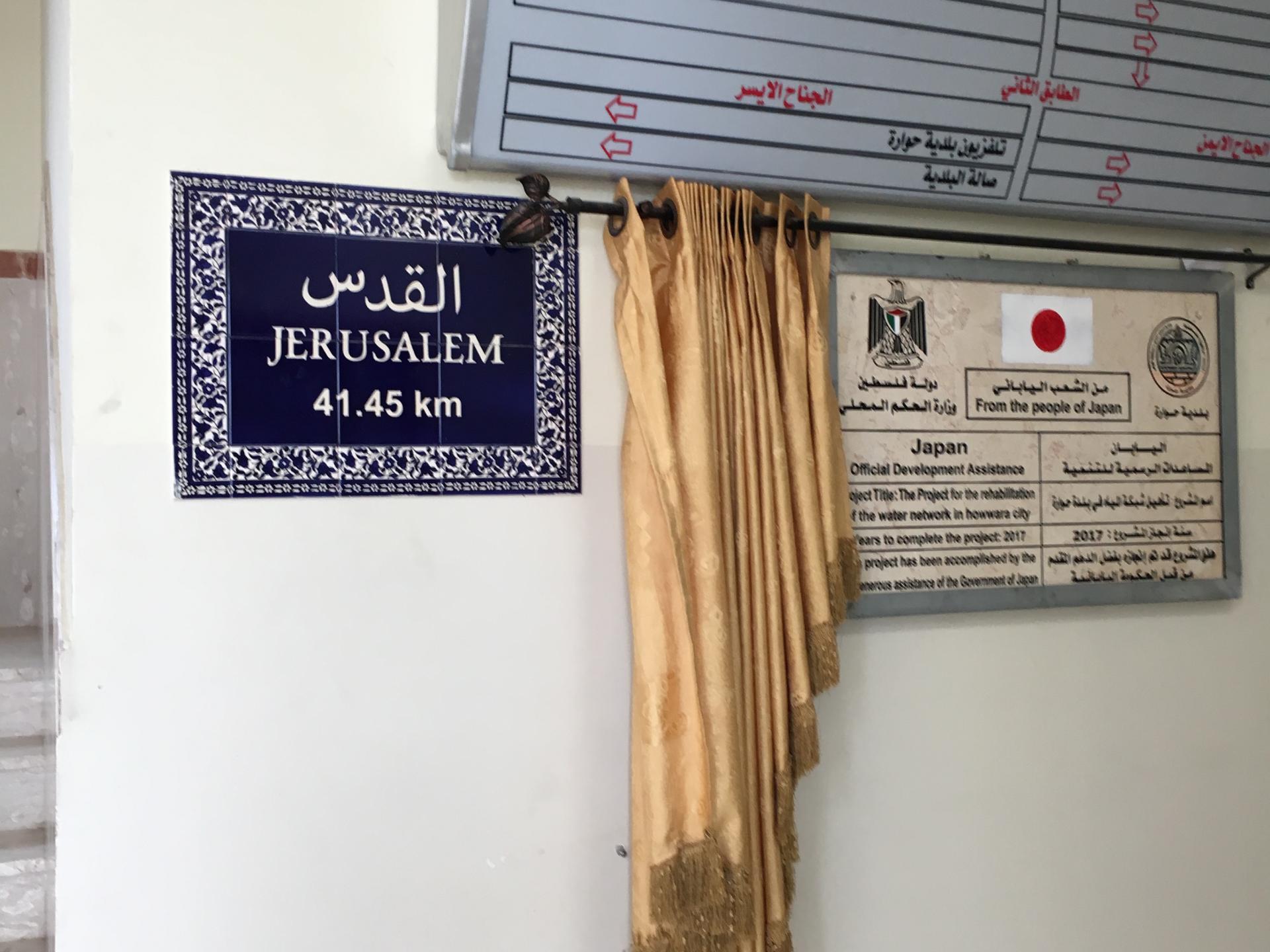
Huwarra: It is the month of Ramadan and we are told that the mayor is unable to meet with us. We spoke with a very personable young man, A., who is responsible for public relations in the municipality.
The problems with the settlers in Yitzhar are ever-present and on-going. Farmers with plots of land close to Yitzhar cannot get to their land to work it or harvest their olives, which are taken by the settlers. Now the plots of land along the fence around Yitzhar have been declared a closed military area. The Huwarra city council has been given no reason for this move.
The largest and most aggressive land expropriation is new. 500 dunam of Palestinian land, outside of Yitzhar, belonging to Huwarra and Awarta, has been expropriated by the Civil Administration for the building of a new road for settlers and the army to use to by-pass Huwarra. The road will go from Za’atra (Tapuach Junction) to the DCO headquarters outside Huwarra. The Palestinian villages along the route of the new road will have no access to it. The existing road, which now serves the settlers, the army and the Palestinians, will have underpasses when the new road is built. A. showed us a simulation of the new road on the computer. The width of the road will be 200 meters, with the asphalt and the margins on each side. There will be a large traffic circle where the checkpoint between Huwarra and Nablus is now situated. The work on the road has not yet begun. Looking at the simulation I thought it would be nice if the Israeli government would finally build a road like that in the Galilee for all the Israeli citizens. Of course the Palestinian owners of the expropriated land have received no compensation.

Huwarra receives its water from Mekorot, and should receive 16 bar (a unit of pressure) per day, which is written in the agreement with Mekorot. The people have seen a worker from Mekorot, whom they are sure is a settler, come to the water meter every day and turn it down to 6 bar. We asked if this person did it on his own initiative or if he was doing it on instructions. A. did not know the answer, but at night someone from the Huwarra council goes and turns the meter up to 16. It’s an on-going game of cat and mouse.
The electricity for the town they get from a Palestinian company in Nablus, which gets it from Israel. There are areas in the town that have an adequate supply of electricity, and other areas (35% of the town) were the flow is insufficient even for lighting.
We asked how A. saw a solution to the Israeli-Palestinian conflict. He expressed the hope that the United Nations would finally demand that Israel implement the resolutions that have been waiting for so many years. “Let us live,” he said. “Give us our land so we can live. Why should some people have all that they need, and others have no rights?”
Einabus: We spoke with a man who has been the secretary and head of the village Council for 14 years. Einabus is a small village, population 2900, next to Huwarra. We went there after reading about the incident between them and the settlers of Yitzhar as reported by B’tselem. In the incident two villagers were working on a bulldozer, on land belonging to the village, to improve a path for the farmers to get to their plots. 30 settlers (from Yitzhar) carrying poles, surrounded the bulldozer, threw rocks at it, broke the windshield and attacked the two men. The two men tried to escape to the village. They were seen and about 50 men from the village came to help them. A fight broke out. The settlers called the army which came and fired rubber-coated bullets and tear gas at the villagers who escaped to the village. The two men and other wounded villagers were taken to the hospital in Nablus. The settlers then vandalized the bulldozer even more by slashing the tires and pulling wires from the motor. We asked what has happened since the B’tselem report. The owner of the bulldozer took it to be repaired which will cost 20,000 shekels. A complaint and demand for compensation has been filed with the DCO, but the villagers don’t have a lot of hope.
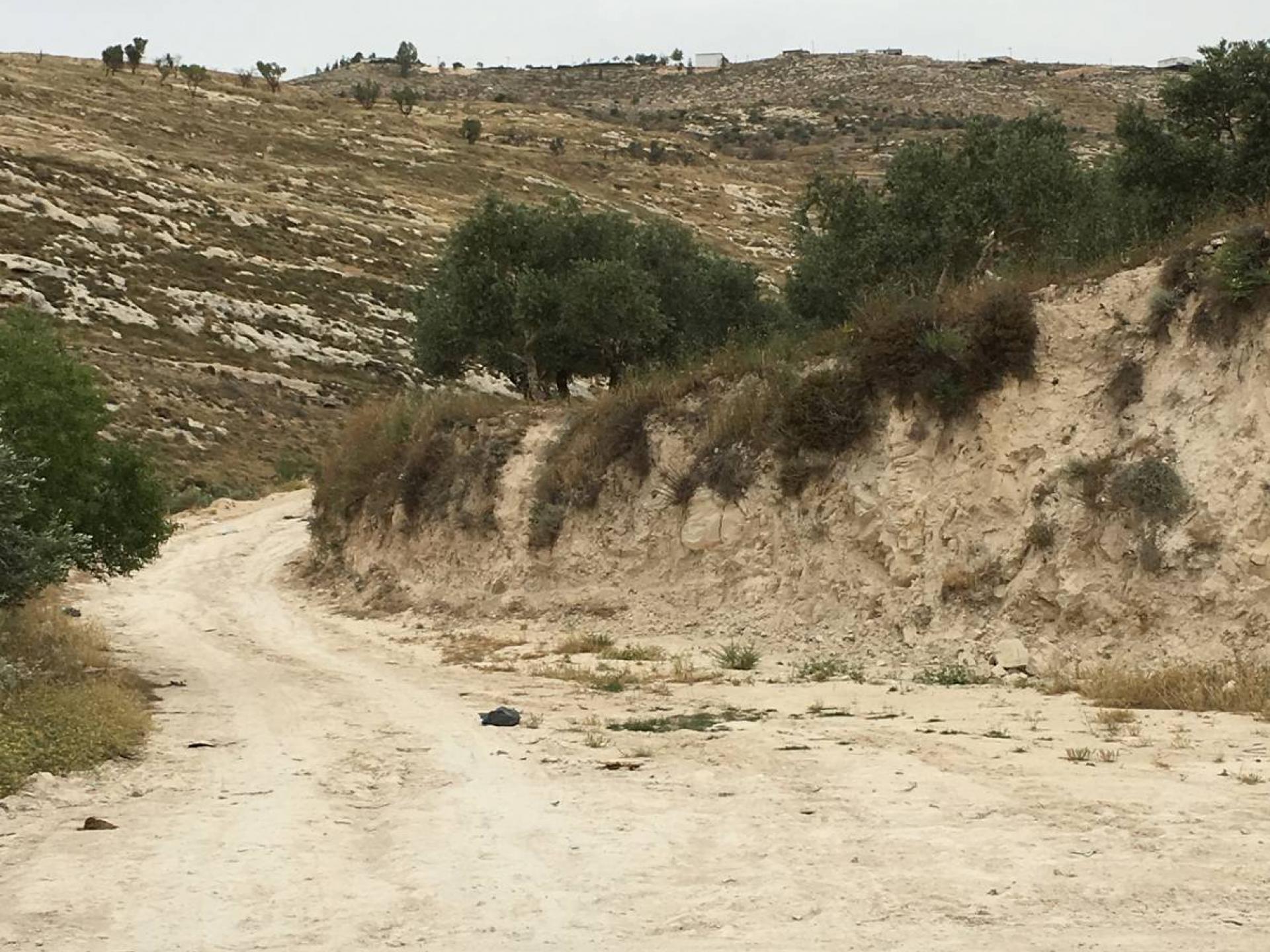
“Yitzhar,” the Council head said, “makes trouble for all the villages in the area – everyday a different village. In Urif a young man was killed. Only on Shabbat do we have quiet. All the settlers should go back to the ’67 borders and leave the Palestinians to live their lives. We don’t have any other bad problems – water and electricity are OK. The only real problem is with the Israeli settlers.”
'Einabus
See all reports for this place-
'Einabus
A village in the Nablus district, west of Hawara, numbering about 3,000 people. 85% of the village's land in Area B, 15% in Area C. 114 dunams of its land were expropriated to establish the violent settlement of Yitzhar and its outposts. Due to the proximity and violence of the settlers sitting on the top of the mountain to invade the village lands, the inhabitants of Einabus regularly suffer from harassment by settlers throwing stones, smashing windows, cutting down olive groves, as well as arson of vehicles and fields. All these were intensified in the second decade of the 21st century.
-
Huwwara
See all reports for this place-
The Huwwara checkpoint is an internal checkpoint south of the city of Nablus, at the intersection of Roads 60 and 5077 (between the settlements of Bracha and Itamar). This checkpoint was one of the four permanent checkpoints that closed on Nablus (Beit Furik and Awarta checkpoints to the east and the Beit Iba checkpoint to the west). It was a pedestrian-only barrier. As MachsomWatch volunteers, we watched therre since 2001 two shifts a day - morning and noon, the thousands of Palestinians leaving Nablus and waiting for hours in queues to reach anywhere else in the West Bank, from the other side of the checkpoint the destination could only be reached by public transport. In early June 2009, as part of the easing of Palestinian traffic in the West Bank, the checkpoint was opened to vehicular traffic. The passage was free, with occasional military presence in the guard tower. Also, there were vehicle inspections from time to time. Since the massacre on 7.10.2023, the checkpoint has been closed to Palestinians.
On February 26, 2023, about 400 settlers attacked the town's residents for 5 hours and set fire to property, such as houses and cars. Disturbances occurred in response to a shooting of two Jewish residents of Har Bracha by a Palestinian Terrorist. The soldiers stationed in the town did not prevent the arson and rescued Palestinian families from their homes only after they were set on fire. No one was punished and Finance Minister Smotrich stated that "the State of Israel should wipe out Hawara." Left and center organizations organized solidarity demonstrations and support actions for the residents of Hawara.Hawara continued to be in the headlines in all the months that followed: more pogroms by the settlers, attacks by Palestinians and a massive presence of the army in the town. It amounted to a de facto curfew of commerce and life in the center of the city. On October 5, 2023, MK Zvi established a Sukkah in the center of Hawara and hundreds of settlers backed the army blocked the main road and held prayers in the heart of the town all night and the next day. On Saturday, October 7, 23 The "Swords of Iron" war began with an attack by Hamas on settlements surrounding Gaza in the face of a poor presence of the IDF. Much criticism has been made of the withdrawal of military forces from the area surrounding Gaza and their placement in the West Bank, and in the Hawara and Samaria region in particular, as a shield for the settlers who were taking over and rioting.
On November 12, 2023, the first section of the Hawara bypass road intended for Israeli traffic only was opened. In this way, the settlers can bypass the road that goes through the center of Hawara, which is the main artery for traffic from the Nablus area to Ramallah and the south of the West Bank. For the construction of the road, the Civil Administration expropriated 406 dunams of private land belonging to Palestinians from the nearby villages. The settlers are not satisfied with this at the moment, and demand to also travel through Hawara itself in order to demonstrate presence and control.(updated November 2023)
. Shoshi AnbarMay-18-2025Huwara: The old houses in Area C
-