
Qalandiya checkpint: On mental terrorism and language that reveals and conceals

At the sight of the sign fastened by plastic shackles to the entry gate of the vehicle checkpoint, I thought it said: Whoever crosses this line on foot is doomed to die.
But no, it blabbers about Palestinians being forbidden to enter Israel without a permit and that what was publicized on Facebook is ‘fake news’.
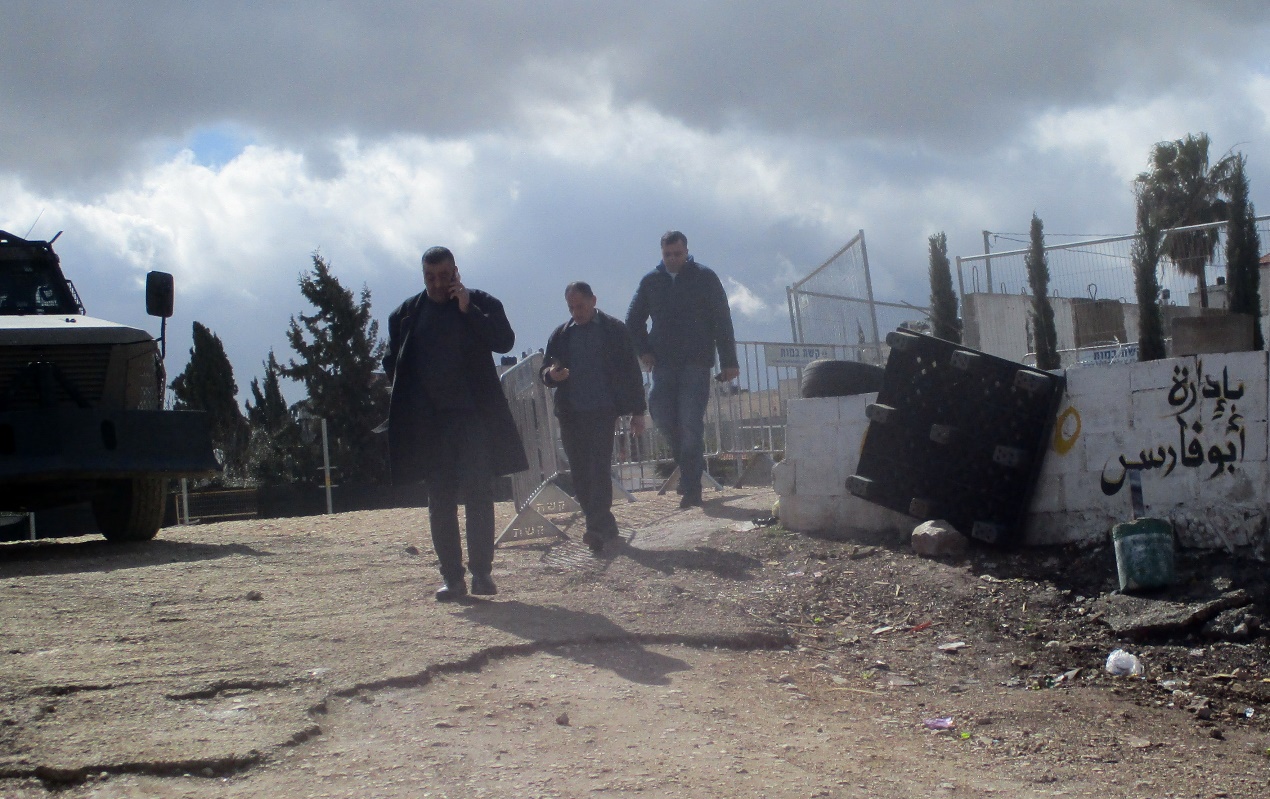
I had come to Qalandiya to hear about the ‘security’ forces’ shooting 55-year old Abed Al Hilawa, a deaf and mentally-disabled person who luckily for him was “only” wounded.
After many talks with people I found mainly suppression in a kind of numbness resulting from fear of what happened and what is likely to happen, since no one is immune against the armed personnel.
Everyone in the refugee camp and its environs knows that this place is one of bloodshed, and distance themselves from it emotionally.
So the quiet, the smiles, and sayings such as “God willing… everything is alright” are illusory, and the soft, pleasant mode of speech is but language that “reveals and conceals” in order for the speaker to survive.
And I understood that one of the ways terrorism is practiced here against the local population is of an emotional/mental kind, which is even stronger and more acidulous than physical violence, for there is no escaping it. And it is the source of the fear of saying on the phone what really takes place, for people are haunted by the knowledge that no only they are the ones listening, and that accounts would be settled.
Qalandiya Checkpoint / Atarot Pass (Jerusalem)
See all reports for this place-
Click here to watch a video from Qalandiya checkpoint up to mid 2019 Three kilometers south of Ramallah, in the heart of Palestinian population. Integrates into "Jerusalem Envelope" as part of Wall that separates between northern suburbs that were annexed to Jerusalem in 1967: Kafr Aqab, Semiramis and Qalandiya, and the villages of Ar-Ram and Bir Nabala, also north of Jerusalem, and the city itself. Some residents of Kafr Aqab, Semiramis and Qalandiya have Jerusalem ID cards. A terminal operated by Israel Police has functioned since early 2006. As of August 2006, northbound pedestrians are not checked. Southbound Palestinians must carry Jerusalem IDs; holders of Palestinian Authority IDs cannot pass without special permits. Vehicular traffic from Ramallah to other West Bank areas runs to the north of Qalandiya. In February 2019, the new facility of the checkpoint was inaugurated aiming to make it like a "border crossing". The bars and barbed wire fences were replaced with walls of perforated metal panels. The check is now performed at multiple stations for face recognition and the transfer of an e-card. The rate of passage has improved and its density has generally decreased, but lack of manpower and malfunctions cause periods of stress. The development and paving of the roads has not yet been completed, the traffic of cars and pedestrians is dangerous, and t the entire vicinity of the checkpoint is filthy. In 2020 a huge pedestrian bridge was built over the vehicle crossing with severe mobility restrictions (steep stairs, long and winding route). The pedestrian access from public transport to the checkpoint from the north (Ramallah direction) is unclear, and there have been cases of people, especially people with disabilities, who accidentally reached the vehicle crossing and were shot by the soldiers at the checkpoint. In the summer of 2021, work began on a new, sunken entrance road from Qalandiya that will lead directly to Road 443 towards Jerusalem and Tel Aviv. At the same time, the runways of the old Atarot airport were demolished and infrastructure was prepared for a large bus terminal. (updated October 2021)
 Tamar FleishmanFeb-27-2026Qalandiya: On the way to prayer
-