
Northern Checkpoint: “Even when things are really bad for us, we’re happy” (Eyad)
6-8:30 a.m.
6 a.m. Barta’a Checkpoint
This is the most crowded time in the morning: dozens of young men arrive a given moment and hurry towards the turnstiles to enter the terminal and get on their way to a day’s work. Passage is intermittent: when the turnstile is stopped, a long waiting line forms and then dissipates within five minutes.
6:30 Anin Checkpoint 214
Passage is slow, the soldiers inspect the passers far behind the middle gate, apparently giving them a slow, thorough check. Yelling is heard from the waiting line down the checkpoint, hidden from sight.
Those coming out, mostly on their way to harvest olives, arrive one by one. We expected many more, but the checkpoint is open every day at this time, so many have already harvested, apparently.
A young man whose family owns an olive grove near Um Reiham asks out help in obtaining a transit permit for his vehicle to cross the Barta’a Checkpoint. The distance from the lands and the inability to access them with work tools and tractor drive the farmers mad. Their chances are scant.
On the phone we hear from a Palestinian friend about the hardships and harassment they must undergo every single day, in order to hold on to their source of livelihood. He says ironically: Even when things are really bad for us, we’re happy…
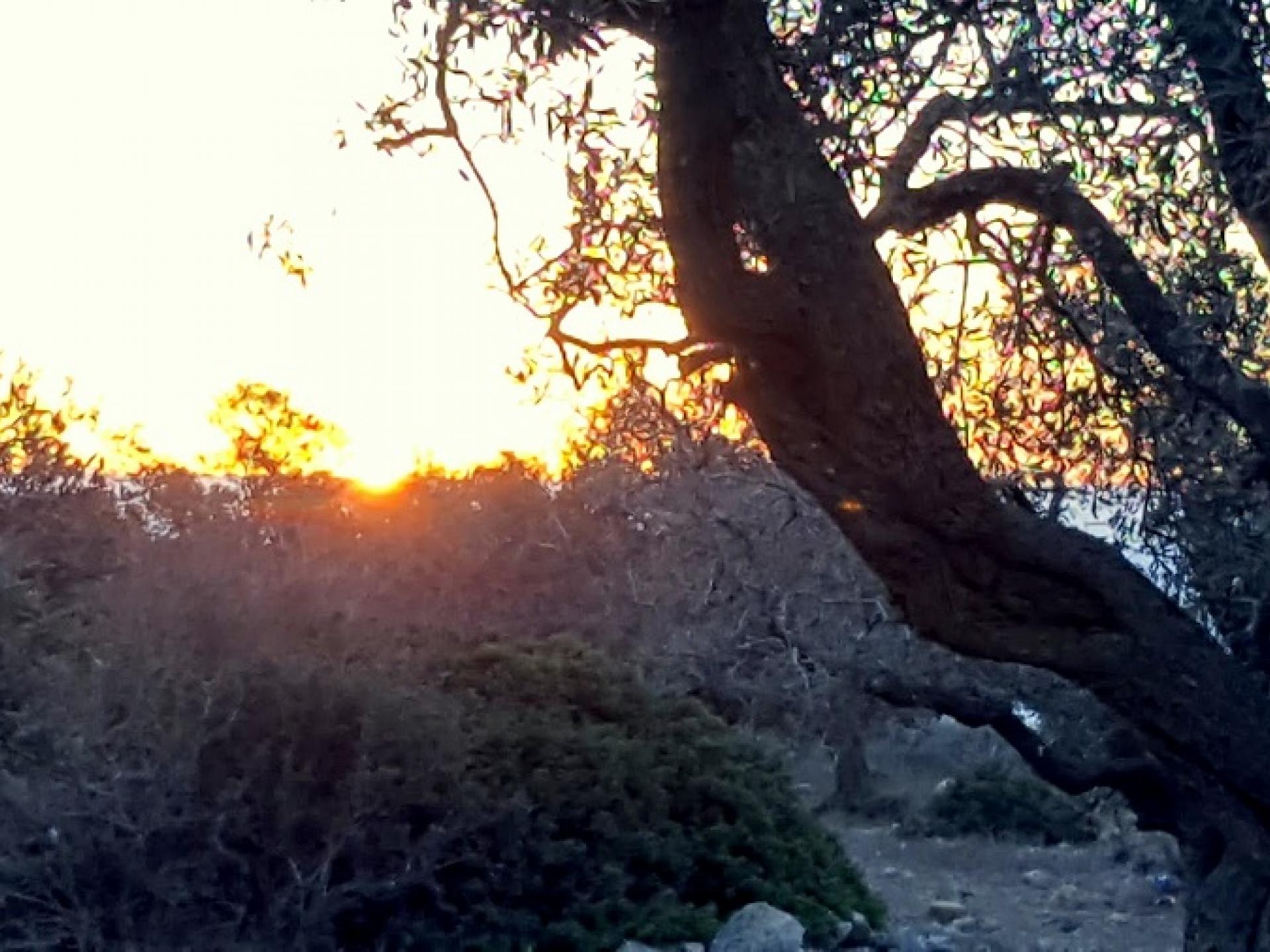
A beautiful sunrise lights up the olive treetops near the checkpoint.
7:45 Tayibe-Roumana Checkpoint 154
The same soldiers who opened the ‘Aneen checkpoint arrived here a few minutes before we did, so the pace of passage is similar – slow. About 40 persons got through.
'Anin checkpoint (214)
See all reports for this place-
'Anin checkpoint (214)
'Anin checkpoint is located on the Separation Fence east of the Israeli community Mei Ami and close to the village of Anin in the West Bank. It is opened twice a week, morning and afternoon, on days with shorter light time, for Anin farmers whose olive groves have been separated from the village by the fence it became difficult to cultivate their land. Transit permits are only issued to those who can produce ownership documents for their caged-in land, and sometimes only to the head of the family or his widow, eldest son, and children. Sometimes the inheritors lose their right to tend to the family’s land. The permits are eked out and are re-issued only with difficulty. 55-year-old persons may cross the checkpoint (into Israel) without special permits. During the olive harvest season (about one month around October) the checkpoint is open daily and more transit permits are issued. Names of persons eligible to cross are held in the soldiers’ computers. In July 2007, a sweeping instruction was issued, stating that whoever does not return to the village through this checkpoint in the afternoon will be stripped of his transit permit when he shows up there next time. Since 2019, the checkpoint has not been allways locked with the seam-line zone gate (1 of 3 gates), and the fence around it has been broken in several sites.
-
Barta’a-Reihan Checkpoint
See all reports for this place-
This checkpoint is located on the Separation Fence route, east of the Palestinian town of East Barta’a. The latter is the largest Palestinian community inside the seam-line zone (Barta’a Enclave) in the northern West Bank. Western Barta’a, inside Israel, is adjacent to it. The Checkpoint is open all week from 5 a.m. to 9 p.m. Since mid-May 2007, the checkpoint has been managed by a civilian security company subordinate to the Ministry of Defense. People permitted to cross through this checkpoint into and from the West Bank are residents of Palestinian communities inside the Barta’a Enclave as well as West Bank Palestinian residents holding transit permit. Jewish settlers from Hermesh and Mevo Dotan cross here without inspection. A large, modern terminal is active here with 8 windows for document inspection and biometric tests (eyes and fingerprints). Usually only one or two of the 8 windows are in operation. Goods, up to medium commercial size, may pass here from the West Bank into the Barta’a Enclave. A permanent registered group of drives who have been approved by the may pass with farm produce. When the administration of the checkpoint was turned over to a civilian security firm, the Ya’abad-Mevo Dotan Junction became a permanent checkpoint. . It is manned by soldiers who sit in the watchtower and come down at random to inspect vehicles and passengers (February 2020).
-
Tayba-Rummana
See all reports for this place-
Tayba-Rummana is an agricultural checkpoint. It is located in the separation fence in front of the eastern slopes of the Israeli city of Umm al-Fahm. The Palestinian villages next to the checkpoint are Khirbet Tayba and Rummana. Dozens of dunams of olive groves were removed from their owners, the residents of these villages on the western side of the separation fence. The Palestinian villages next to the checkpoint are Khirbet Tayba and Rumna. Dozens of olives dunams were removed from these villages' residents and swallowed up in a narrow strip of space, on the western side of the separation fence. The checkpoint allows the plantation owners who have permits to pass. Twice a week, the checkpoint opens for fifteen minutes in the morning and evening. During the harvest season, it opens every day for fifteen minutes in the morning (around 0630) and fifteen minutes in the afternoon (around 1530). (February 2020).
-