
Jordan Valley, Khirbet Makhul
Visit with B. at Makhoul
His wife and children are not home at the moment. A.H. from the nearby encampment sat with us at the table. Unlike him, he keeps silent. Apparently for about a week he has been suffering severe abdominal pain. The situation looks unbearable. We decided to take him to Al Malah area, from where he could stop a cab to the clinic at Tamoun village. Close to the exit from Makhoul an army jeep passed us by. Immediately following, B. received notice that the jeep had entered their hamlet and climbed all the way to his home. Tension was felt throughout our trip.
As soon as A.H. got on a cab, we returned to Makhoul. We learned that the jeep climbed the rocky road all the way to the house, turned around and went back. Such arbitrary visits by the army are familiar there. We heard that the day before, soldiers in an army jeep visited a family living close to the road, to check out a concrete platform that was poured there. The surveillance antennas on the peak above the shepherd community are watchful and don’t miss a thing, including unusual visits such as ours. One grows accustomed to living like this – knowing one is under constant watch. B. tells us that sometimes a settler-colonist comes down from the outpost in the Umm Zuka nature reserve on his mini-tractor and rides around amongst the Palestinians’ homes and sheep pens. They (settler colonists) are free to rove around anywhere in the area. Even if it’s a private area where people live, even in areas defined as firing zones or as nature reserves. Such official limitations are only enforced regarding Palestinians.
Later we met with F. from En Al Beda. He told us that in addition to the 10 water tankers that were confiscated from Bardala two weeks ago, a tractor with a water tanker was sequestered about 3 days ago. He said that these recent confiscations have been carried not by the Civil Administration officials but rather by regular soldiers.
Jordan Valley
See all reports for this place-
Jordan Valley The Jordan Valley is the eastern strip of the West Bank. Its area consists of almost a third of the West Bank area. About 10,000 settlers live there, about 65,000 Palestinian residents in the villages and towns. In addition, about 15,000 are scattered in small shepherd communities. These communities are living in severe distress because of two types of harassment: the military declaring some of their living areas, as fire zones, evicting them for long hours from their residence to the scorching heat of the summer and the bitter cold of the winter. The other type is abuse by rioters who cling to the grazing areas of the shepherd communities, and the declared fire areas (without being deported). The many groundwaters in the Jordan Valley belong to Mekorot and are not available to Palestinians living in the Jordan Valley. The Palestinians bring water to their needs in high-cost followers.
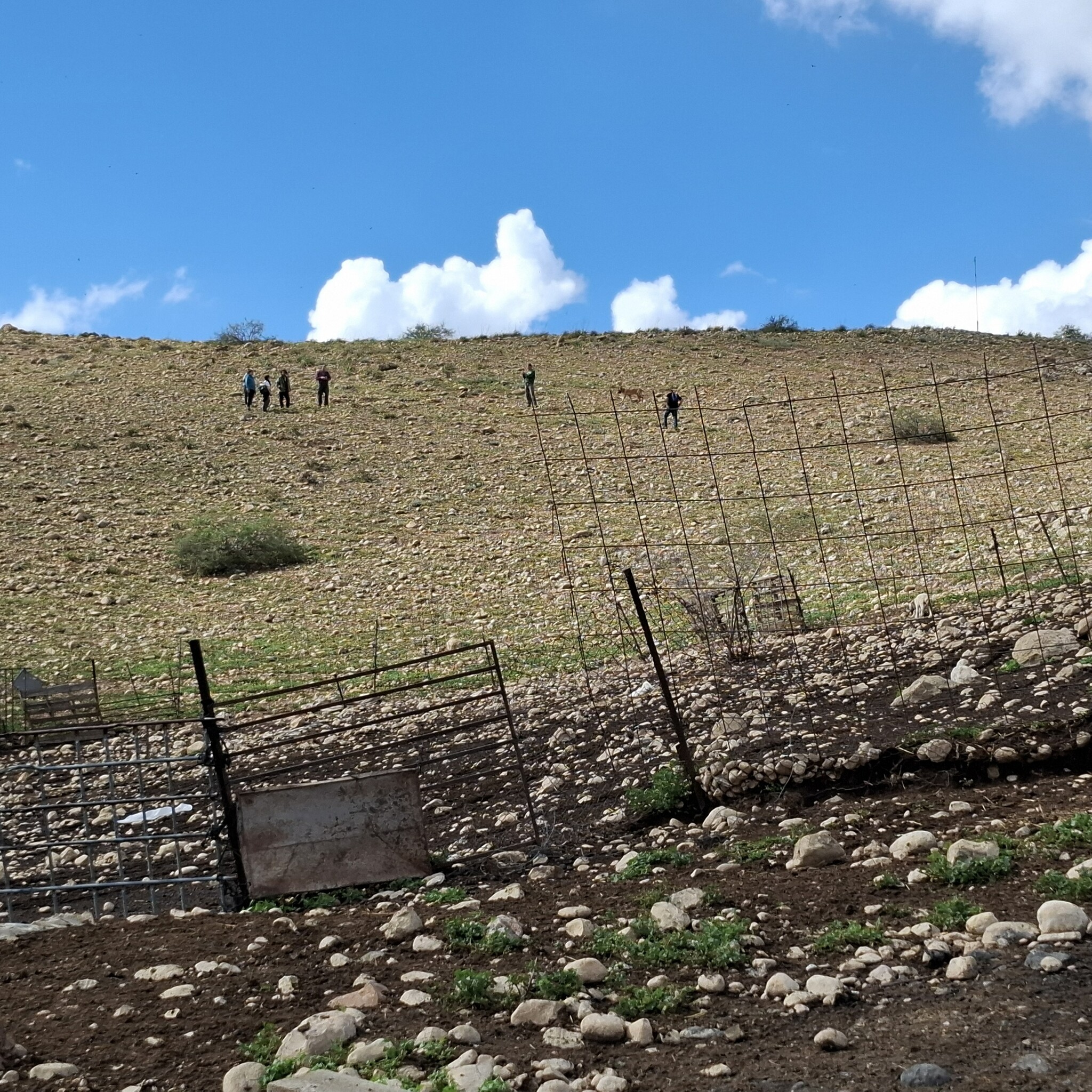 Daphne BanaiApr-7-2026Al-Farsiyya. Ruthie and Michael prevent the assailants from going down to A's camp
-
Khalet Makhul
See all reports for this place-
Khalet Makhul
A small settlement of a shepherd community located on the way to the settlement of Hemdat. Two nearby outposts make life miserable for the Palestinians, who make a living from grazing, and the army backs the settlers. As a result, the possible grazing areas are getting smaller.
The local children attend school in the settlement of Ein Al-Beida. Long lines of 3 hours sometimes stretch out at the Hamra and Tayasir checkpoints leading to the town of Tubas, making it difficult to get water, supplies, and sell the cheese, milk, and meat that the residents produce for their living.
Following a deadly attack at the Tayasir checkpoint in February 2025, the checkpoint was closed completely for the time being.
(Updated March 2025)
-