
Qalandiya - A very slow, crowded morning.
05.20. Three long lines extended down the newly constructed metal corridor. It was still dark. As the winter will advance, no doubt it will get harder and harder to negotiate the barriers along the path. As the building process is likely to take a long while (first traces of activity are showing in the fenced-off enclosure – a bulldozer and piles of rubble), could we suggest that the authorities turn this into a smooth slope, covering and thus eliminating these steps?
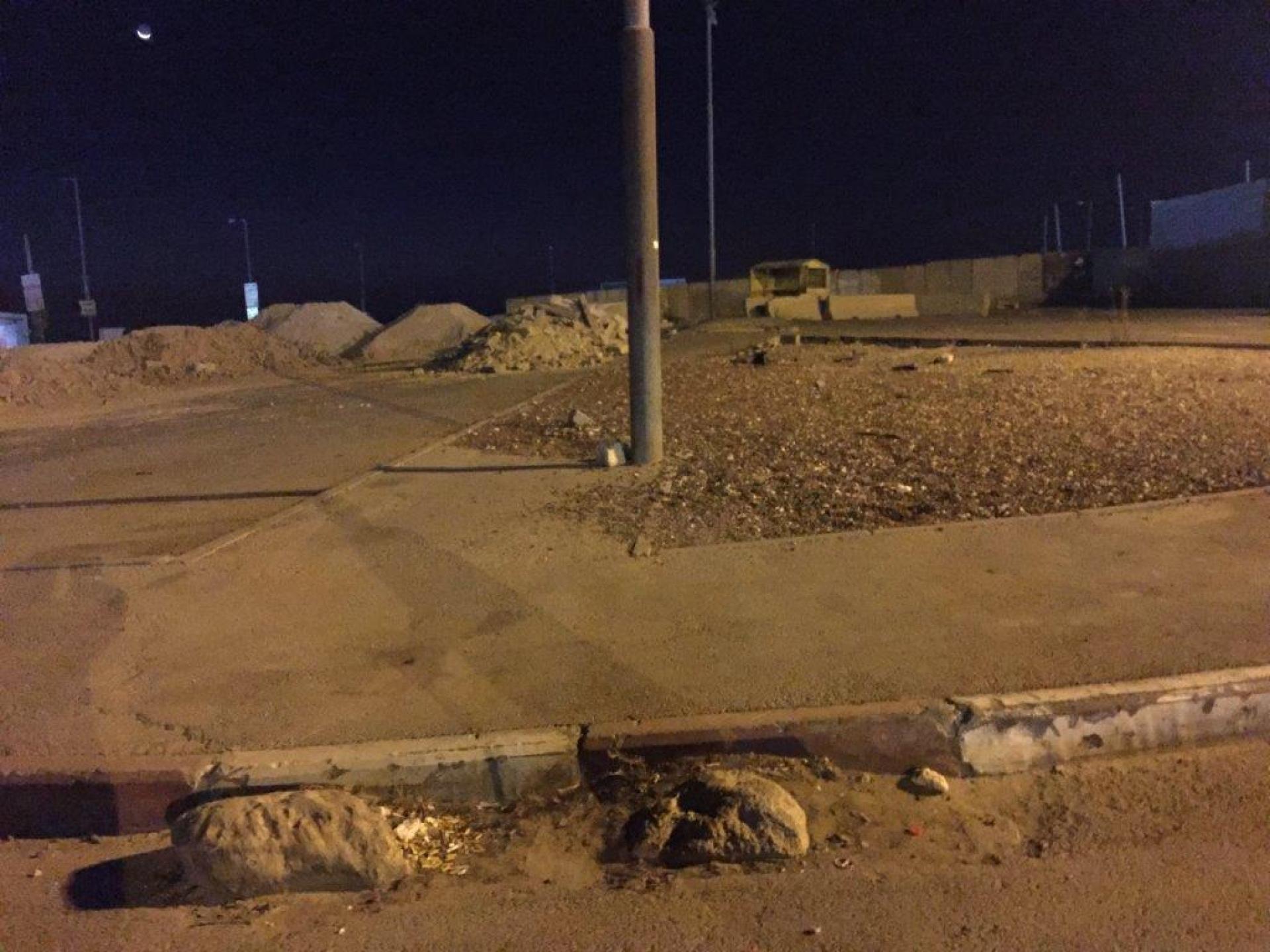
Our friend H whom we met halfway down the line, said he had been waiting 25 minutes already.
All five checking stations were lit up as being open, but we noticed that anyone turning to no.5 immediately turned back, as if it was not functioning. Soon after, however, it seemed to open like the others, all of which had long lines in front of them. Throughout the morning there were crowds at each checking station which moved very slowly. This, of course, meant that the lines in the shed remained long – and irritable. It was a wonder that the threatened chaos did not occur.
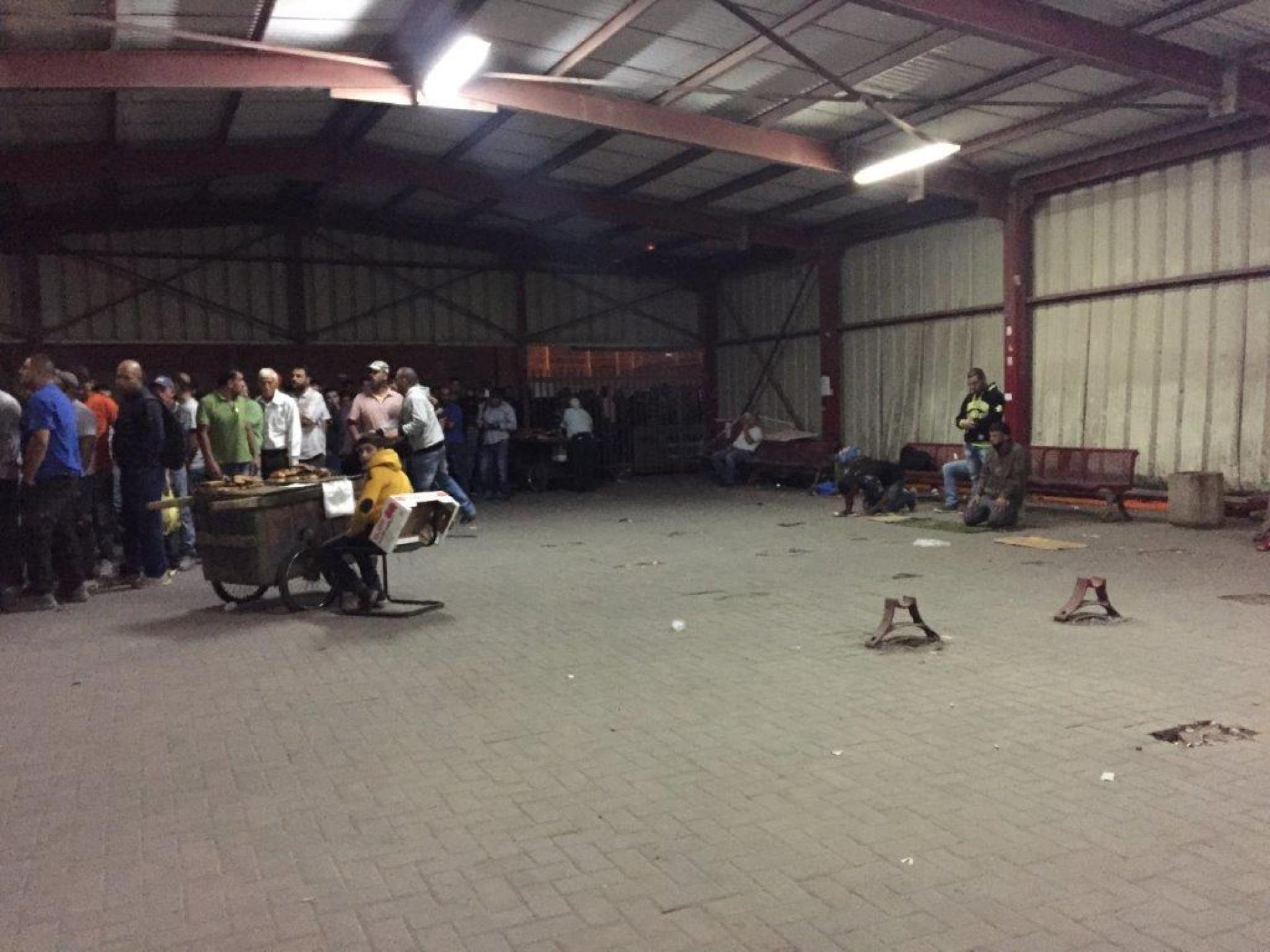
Two guards and a policeman were present. The D.C.O. officer arrived at 6.15 – to find a line patiently waiting at the Humanitarian Gate – and remained there all of 12 minutes. One of the guards then operated the gate (we have seen him do this in the past), opening it at regular intervals to big groups each time. In fact, the gate was particularly busy today, with old folk hobbling on sticks and crutches, some families with little children. Just before 8 o’clock this guard disappeared, and the policeman and second guard sat inside the aquarium, seemingly paying no attention, and people did not know if the gate was now to remain closed, in which they would have to join one of the still long lines. But at 8.10 the policeman came outside and started checking and admitting those waiting.
We noticed a pile of carefully labelled luggage near the humanitarian gate, and later identified the owner as a woman from Gaza who had been in a Ramallah hospital. She was now on her way home but had first to call at the D.C.O. office which was to open at 9 (or 9.30, she said – being realistic?). We left her waiting patiently, when we joined a queue which by now was within the sleeve, at 8.20. It took about25 minutes to pass through to the Israeli side.
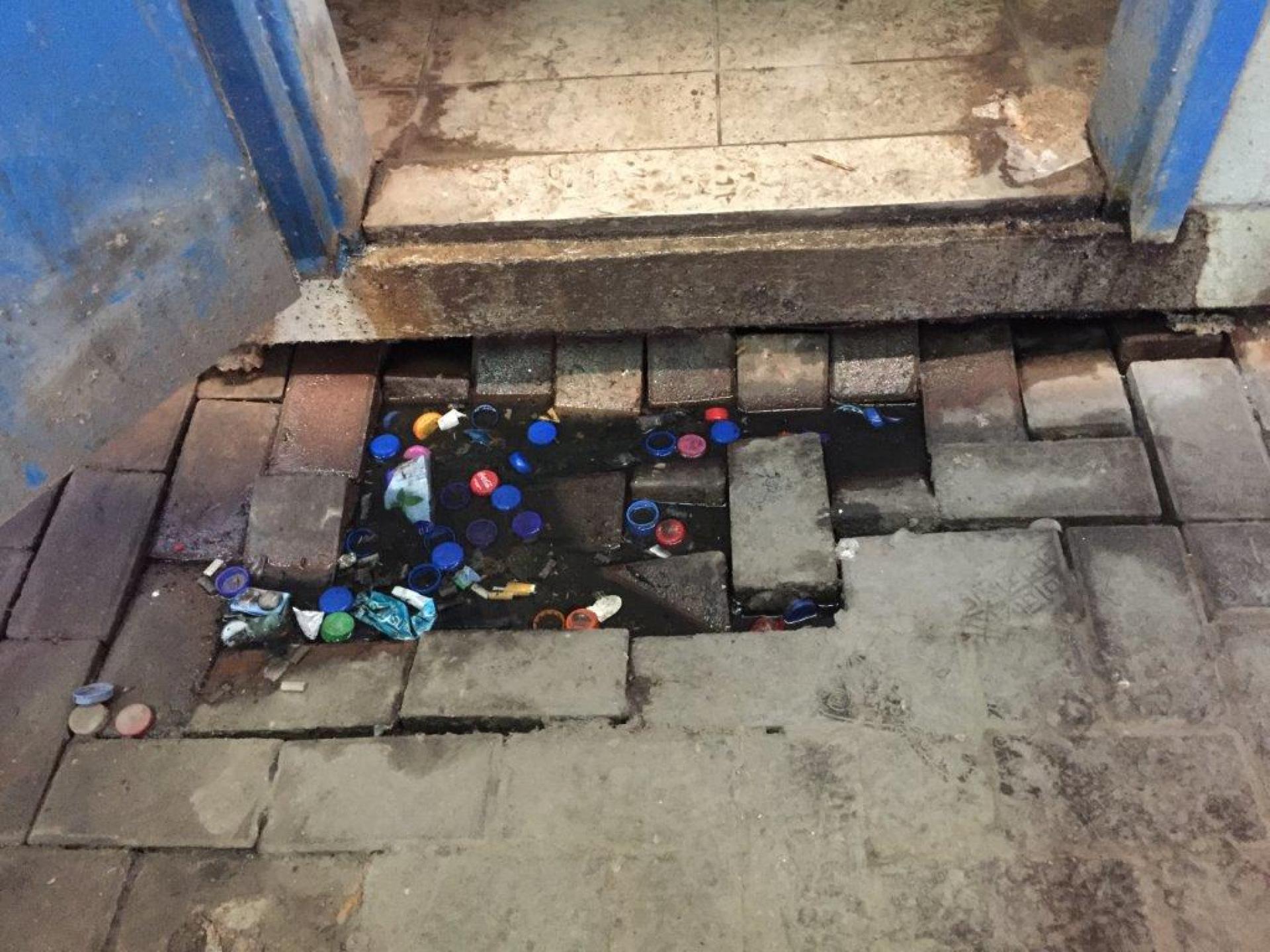
After we have commented for years on the stench coming from the toilets, today Natanya was forced actually to use one. She was so shocked by the filth that she immediately returned to photograph the place. The attached picture will give you some idea of the experience.
Qalandiya Checkpoint / Atarot Pass (Jerusalem)
See all reports for this place-
Click here to watch a video from Qalandiya checkpoint up to mid 2019 Three kilometers south of Ramallah, in the heart of Palestinian population. Integrates into "Jerusalem Envelope" as part of Wall that separates between northern suburbs that were annexed to Jerusalem in 1967: Kafr Aqab, Semiramis and Qalandiya, and the villages of Ar-Ram and Bir Nabala, also north of Jerusalem, and the city itself. Some residents of Kafr Aqab, Semiramis and Qalandiya have Jerusalem ID cards. A terminal operated by Israel Police has functioned since early 2006. As of August 2006, northbound pedestrians are not checked. Southbound Palestinians must carry Jerusalem IDs; holders of Palestinian Authority IDs cannot pass without special permits. Vehicular traffic from Ramallah to other West Bank areas runs to the north of Qalandiya. In February 2019, the new facility of the checkpoint was inaugurated aiming to make it like a "border crossing". The bars and barbed wire fences were replaced with walls of perforated metal panels. The check is now performed at multiple stations for face recognition and the transfer of an e-card. The rate of passage has improved and its density has generally decreased, but lack of manpower and malfunctions cause periods of stress. The development and paving of the roads has not yet been completed, the traffic of cars and pedestrians is dangerous, and t the entire vicinity of the checkpoint is filthy. In 2020 a huge pedestrian bridge was built over the vehicle crossing with severe mobility restrictions (steep stairs, long and winding route). The pedestrian access from public transport to the checkpoint from the north (Ramallah direction) is unclear, and there have been cases of people, especially people with disabilities, who accidentally reached the vehicle crossing and were shot by the soldiers at the checkpoint. In the summer of 2021, work began on a new, sunken entrance road from Qalandiya that will lead directly to Road 443 towards Jerusalem and Tel Aviv. At the same time, the runways of the old Atarot airport were demolished and infrastructure was prepared for a large bus terminal. (updated October 2021)
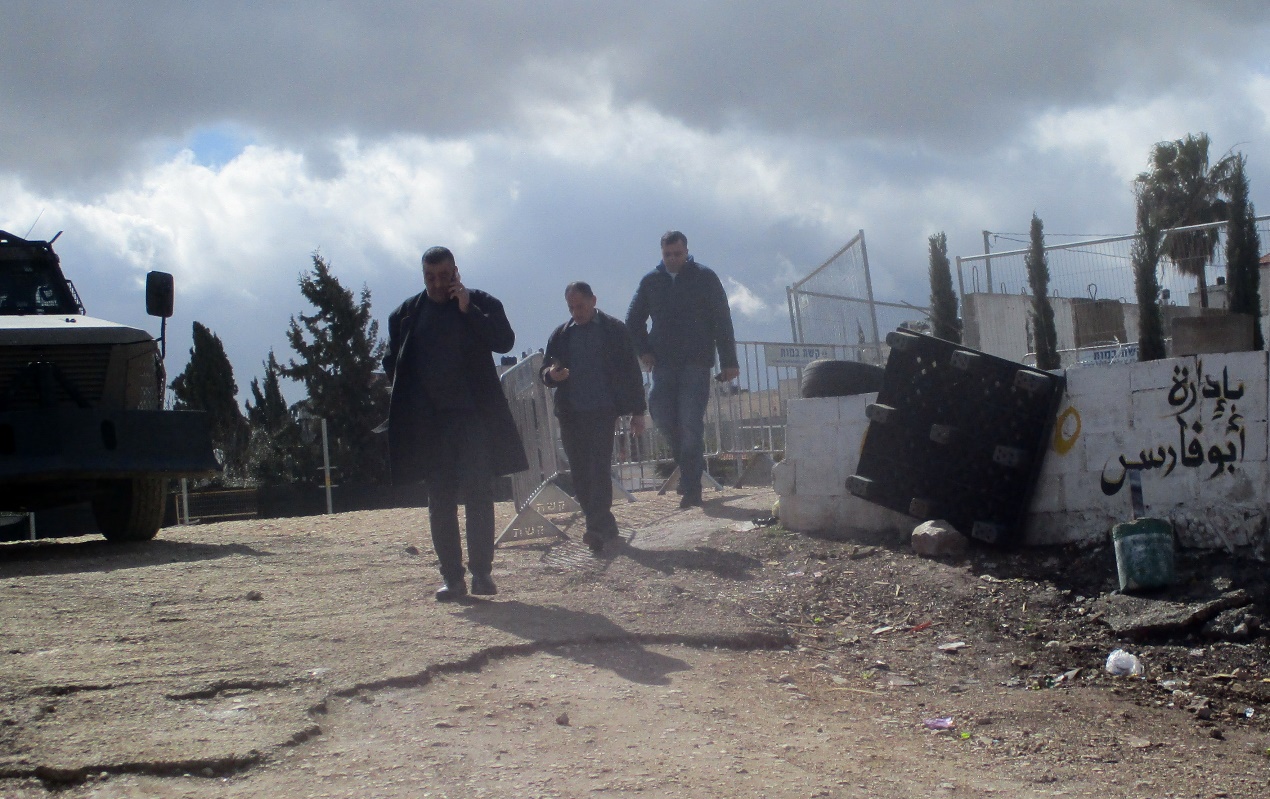 Tamar FleishmanFeb-27-2026Qalandiya: On the way to prayer
-