
Qalandiya
The daily transport van that drives patients back to Gaza was waiting because it was not yet 4 p.m., the time it is usually supposed to leave. In it were the driver, a resident of East Jerusalem, and his assistant, from the Gaza Strip. The assistant is responsible for seating the patients and their accompaniers, and collecting money from the passengers, and both he and the driver are accountable that none of the passengers sneak out of the vehicle and into the area of Israel-proper: after all, the State of Israel would be at serious risk if a resident of the Gaza Strip – whether healthy or ill – would stay in its area. But the human cargo was not yet to be seen. Sometimes patients arrive at the checkpoint as early as 8 a.m. but are not allowed out of the checkpoint, and even if the weather is scathing hot they are forced to wait until 4 p.m., the driver told us.
What do those patients do who arrive too late and their transport has already taken off? Where do they sleep? I asked. This he did not know. He has no idea about things he does not see nor witness. Nor do I.
When the occupation forces work, they do a thorough job. When they shoot they have no qualms about hitting the living body. And when they demolish, they leave only rubble behind.
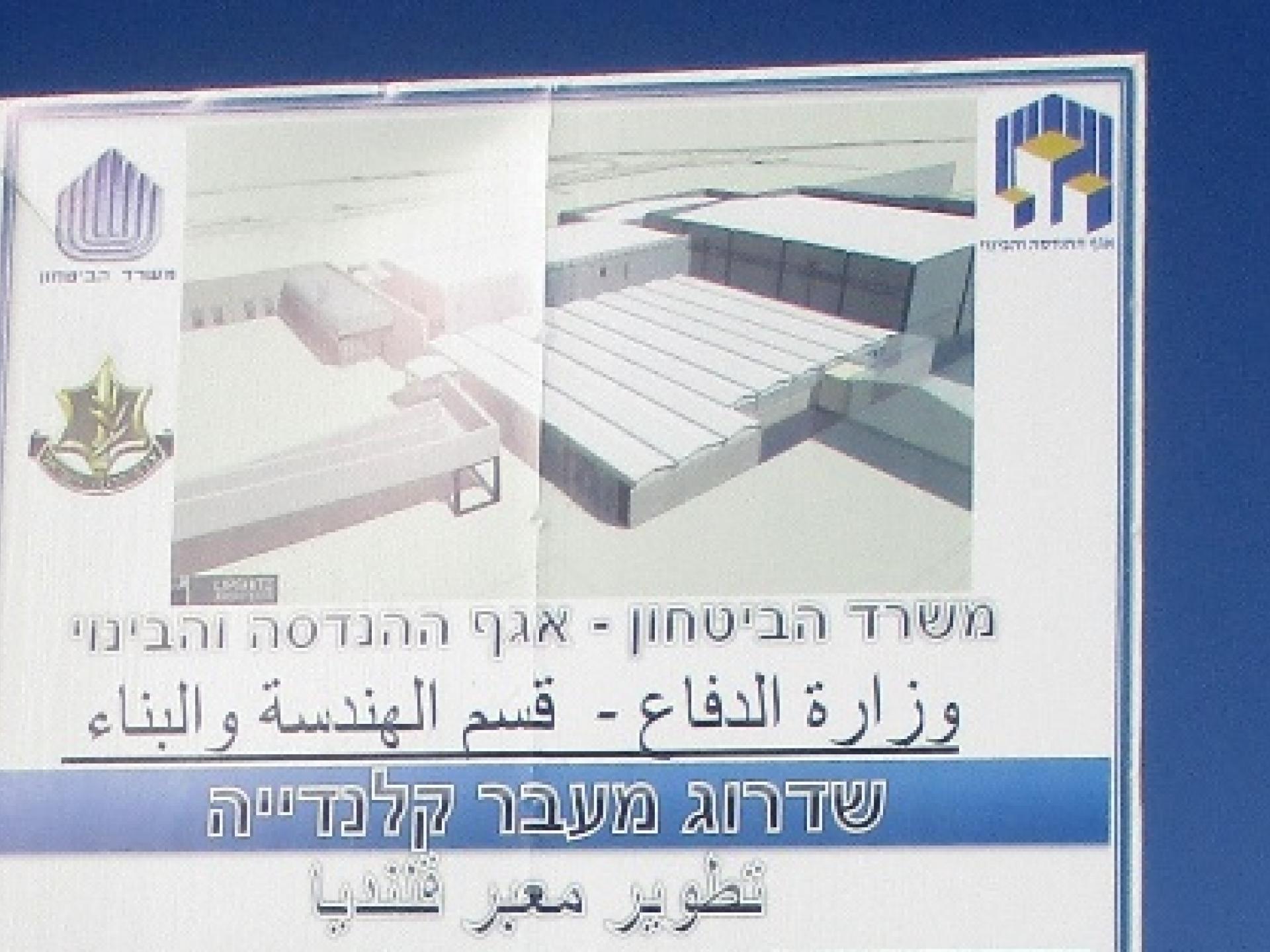
A ceremonious sign announces the “Upgrading of Qalandiya Terminal”. In the meantime pedestrians must hop over and in between the rubble.
Since the car park has been sequestered from its owners, there is nowhere to park, and now the roundabout, too, once the beating heart of the site, has been fenced in by concrete slabs , and heavy equipment has upturned the stony surface and turned it, too, into a chaos of rubble.
At the same time, an aggressive and violent campaign is under way to remove the vendors: the shawarma stand (meat sandwiches) and its owner are gone, the almond man and his roasting pot are gone, and so is the truck from which a father and his two children sold vegetables and fruit. The few who insist on staying – for this is the only way they can feed their children – are persecuted and threatened. A civilian security guard emerging from the checkpoint compound scolded and threatened them. H is the one, the people point at him, who came out in the morning with a teargas canister and sprayed them and their goods.
This is a public place, why can’t they sell their goods here? I asked the guard.
“Because this is a place of security selection”, he replied, and left.
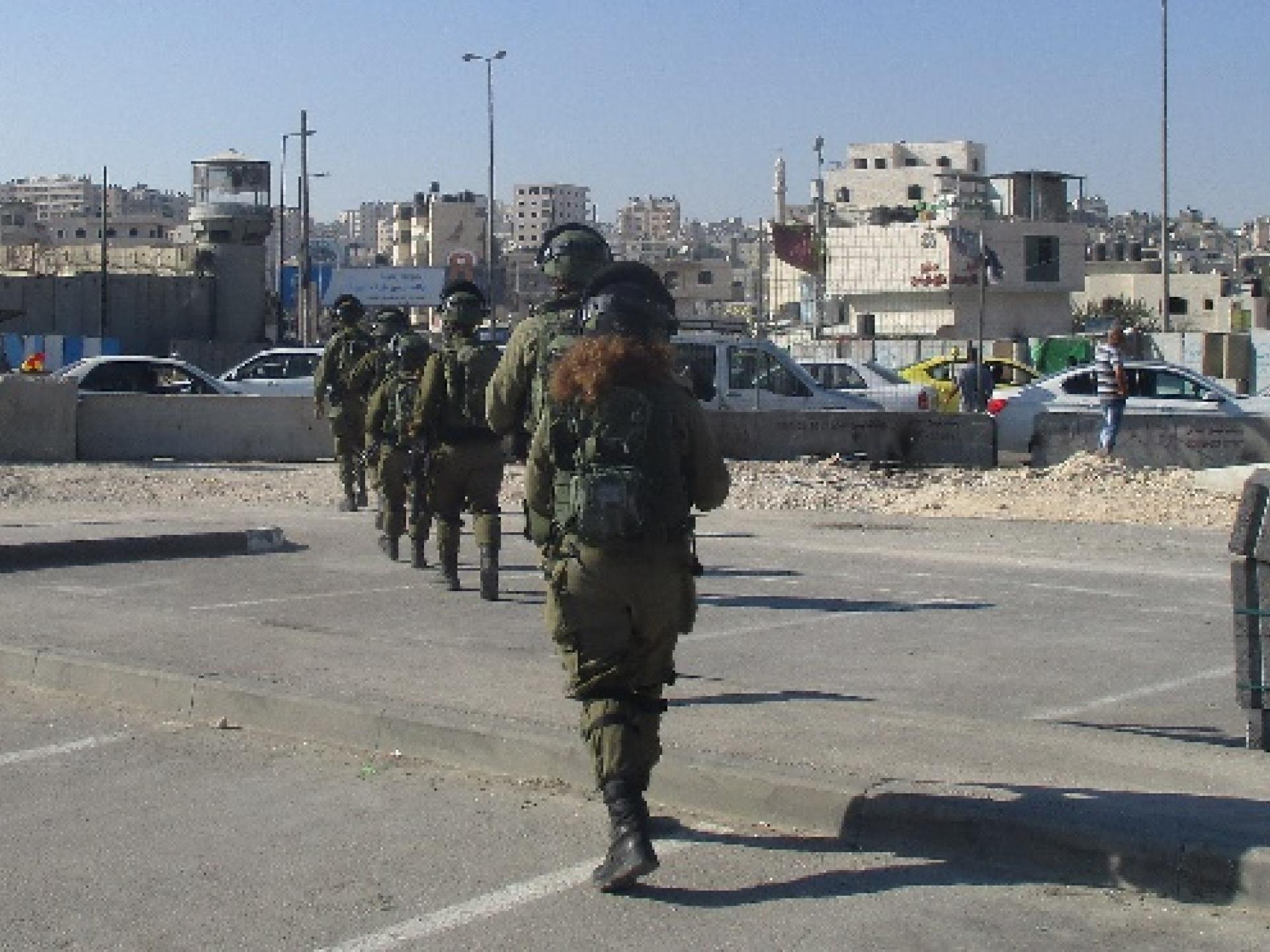
One could not ignore, or not notice, or not be taken aback by a group of men and women soldiers armed with rifles and grenade launchers – some of them bearing both types of weapon on their chest – who encircled the compound.
These armed men and women emerged from the rear of the checkpoint, marched in single file towards the Palestinian side, turned left, and returned into the checkpoint compound by a track that is out of bounds for pedestrians, where more than one Palestinian man and woman have lost their lives.
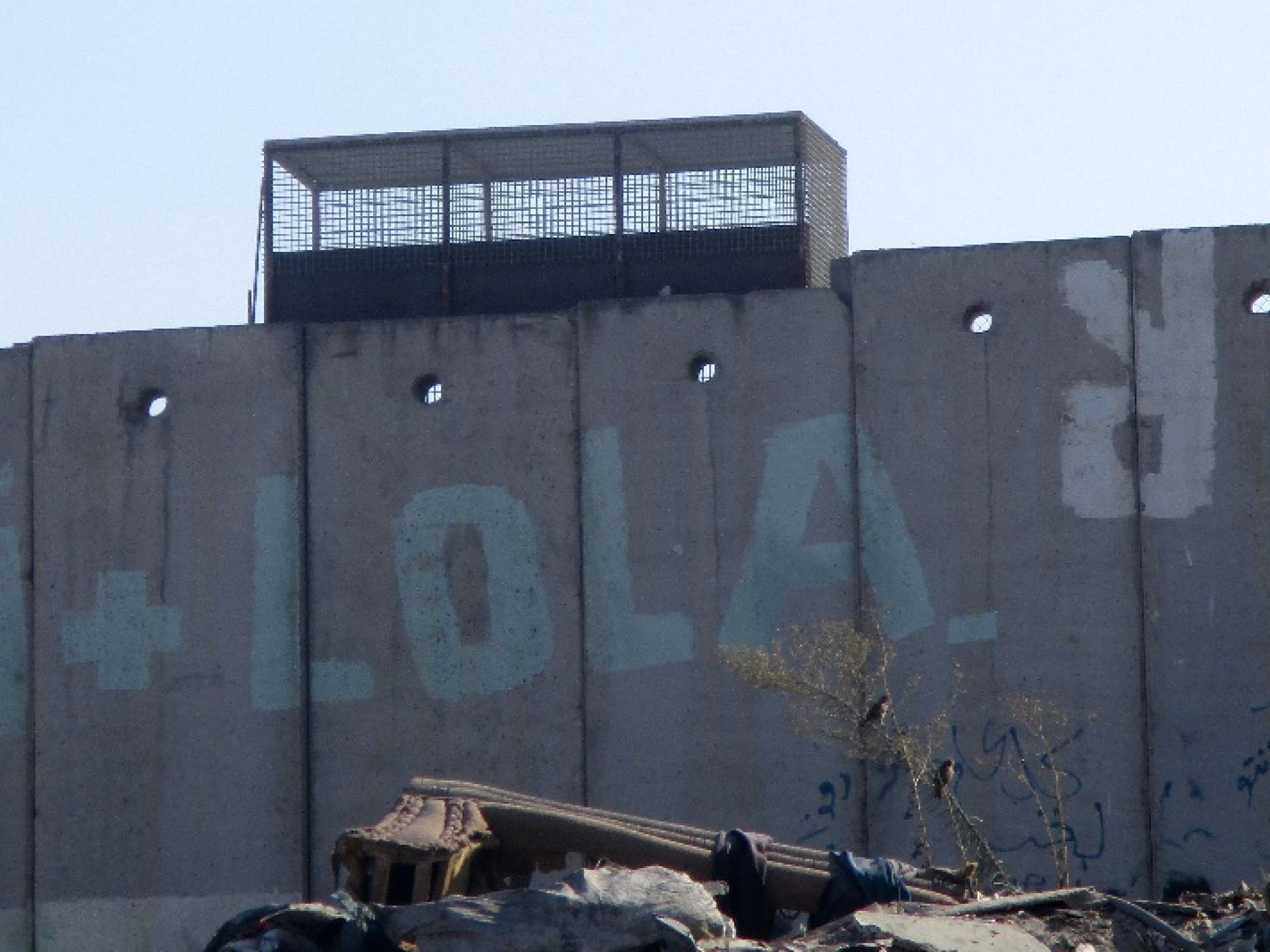
And way up on top, above the wall, one of the sniper posts has been renovated, and is now higher and fortified with rocks, offering a more precise position to sharpshoot Palestinians who are protesting, or demonstrating, or simply crowding around.
Qalandiya Checkpoint / Atarot Pass (Jerusalem)
See all reports for this place-
Click here to watch a video from Qalandiya checkpoint up to mid 2019 Three kilometers south of Ramallah, in the heart of Palestinian population. Integrates into "Jerusalem Envelope" as part of Wall that separates between northern suburbs that were annexed to Jerusalem in 1967: Kafr Aqab, Semiramis and Qalandiya, and the villages of Ar-Ram and Bir Nabala, also north of Jerusalem, and the city itself. Some residents of Kafr Aqab, Semiramis and Qalandiya have Jerusalem ID cards. A terminal operated by Israel Police has functioned since early 2006. As of August 2006, northbound pedestrians are not checked. Southbound Palestinians must carry Jerusalem IDs; holders of Palestinian Authority IDs cannot pass without special permits. Vehicular traffic from Ramallah to other West Bank areas runs to the north of Qalandiya. In February 2019, the new facility of the checkpoint was inaugurated aiming to make it like a "border crossing". The bars and barbed wire fences were replaced with walls of perforated metal panels. The check is now performed at multiple stations for face recognition and the transfer of an e-card. The rate of passage has improved and its density has generally decreased, but lack of manpower and malfunctions cause periods of stress. The development and paving of the roads has not yet been completed, the traffic of cars and pedestrians is dangerous, and t the entire vicinity of the checkpoint is filthy. In 2020 a huge pedestrian bridge was built over the vehicle crossing with severe mobility restrictions (steep stairs, long and winding route). The pedestrian access from public transport to the checkpoint from the north (Ramallah direction) is unclear, and there have been cases of people, especially people with disabilities, who accidentally reached the vehicle crossing and were shot by the soldiers at the checkpoint. In the summer of 2021, work began on a new, sunken entrance road from Qalandiya that will lead directly to Road 443 towards Jerusalem and Tel Aviv. At the same time, the runways of the old Atarot airport were demolished and infrastructure was prepared for a large bus terminal. (updated October 2021)
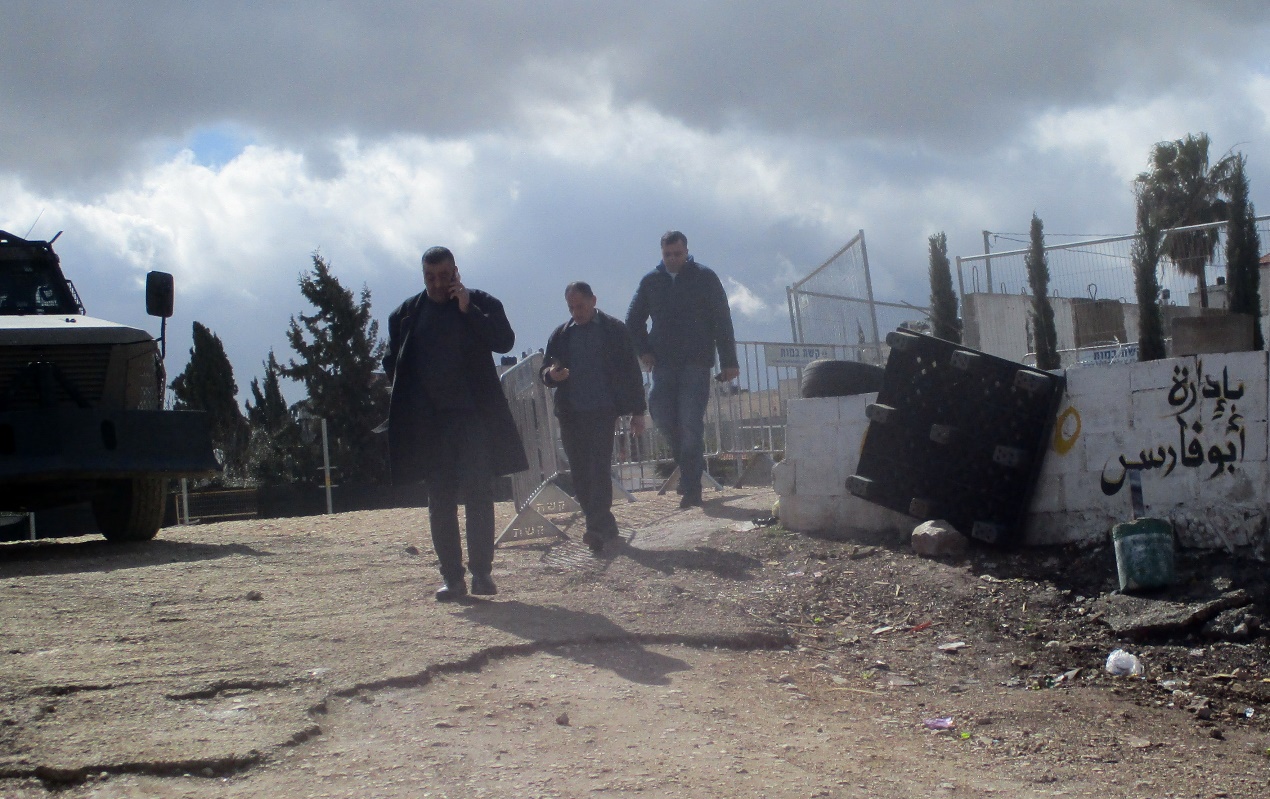 Tamar FleishmanFeb-27-2026Qalandiya: On the way to prayer
-