
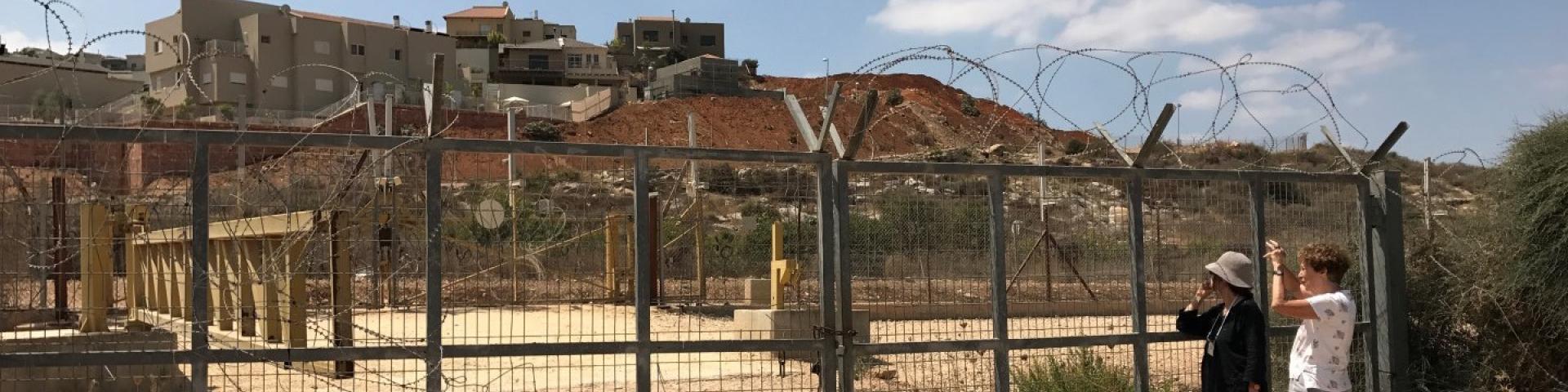
Exploitation and Profiteering: Palestinians Forced to Pay a Fortune to Work in Israel by Amira Haas
Exploitation and Profiteering: Palestinians Forced to Pay a Fortune to Work in Israel
The illegal trade in permits cost 20,000 workers $140 million last year, each paying up to around $7000. The profits go to brokers and employers
Amira Hass, Haaretz
Oct 23, 2019 12:55 PM

Around half an hour earlier they successfully went through one of the crossings from the West Bank into Israel; that is, they have permits to enter. The early hour indicates that they’re laborers, and they’re waiting there for two reasons: Either their transportation to work hasn’t yet arrived, or they’re waiting for someone to hire them.
One of them is Maher, 34, from the Jenin area, who in August and September waited daily on the other side of the Sha’ar Ephraim crossing (between Tul Karm and Taibeh) for someone needing a painter or handyman.
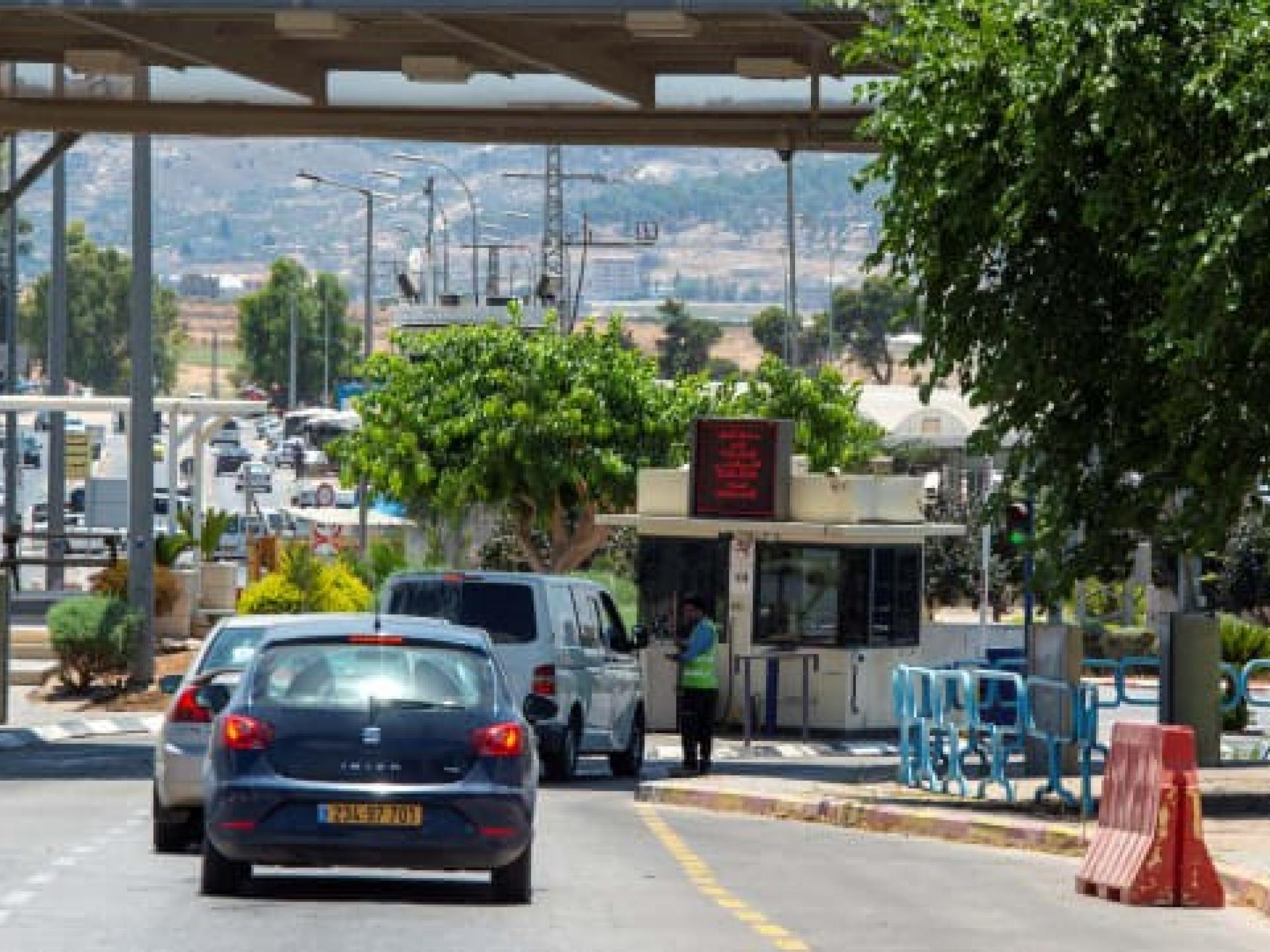
Maher belongs to the category of Palestinians who are forced to buy an Israeli work permit. A recent study by the Bank of Israel estimates that around one-third of West Bank workers in Israel must do this, thus in 2018 more than 20,000 people paid almost half a billion shekels ($140 million) to brokers and Israeli companies and employers.
They each pay between 1,500 shekels and 2,500 shekels a month – between one-third and one-half of their potential earning power in Israel. Maher paid 2,500 shekels in August and 2,500 in September, but he estimates that he didn’t work more than 20 days in the entire two-month period. After deducting travel costs, he took home only a few hundred shekels each month.
Field activists in the rights groups Kav La’Oved and Machsom Watch say they’ve heard of higher amounts being charged for each permit. This trading in permits is illegal, and needless to say, whether it’s a proper permit or a bought one, all pass the regular security screenings and checks.
The Bank of Israel study, published at the end of September, backs up an estimate five years ago by Kav La’Oved, which offers legal aid and advice to workers from various communities whose rights aren’t protected by Israel’s Histadrut labor federation. The May 2014 report said that based on questionnaires answered by 100 laborers, between 25 and 30 percent of the Palestinian workers are forced to buy their permits.
Bottom of Form
The new study gives a conservative estimate of the profits in the illegal permits’ business in 2018: 122 million shekels. This money is divided among brokers, Israeli clerks and the employers whose names appear on the permits.
The study doesn’t try to estimate the distribution of the profits among the various people involved. Khaled Dukhi, a labor lawyer with Kav La’Oved, says the practice is expanding daily “because it’s profitable, even more than actually hiring a laborer. What’s really disturbing is that everyone knows about the practice and who’s involved – Israelis and Palestinians, Jews and Arabs.”
The study mentions the 2013 conviction of an Israeli who ran an illegal network that traded in permits. He bribed two Israeli clerks and with the help of four Palestinian brokers sold 1,341 work permits for 4 million shekels between 2007 and 2010. Maher told Haaretz that he paid the money at an office that operates openly in Jenin and claims to be a lawyers’ office. Around a month later, the office told him his work permit was waiting for him.
At best, the Palestinians who were forced to buy a permit find long-term work with one employer. At worst, they’re using the phony permit to seek casual, daily employment. Sometimes it can take two or three months to find work. Sometimes the permit expires before they succeed.
This trade in permits that has developed over the past 30 years is well known to the authorities, and it wouldn’t be hard for them to get to the people involved, particularly the employers. The permit trade is possible because on the one hand the government sets quotas for Palestinian workers in each industry where these workers are allowed, and on the other it ties the workers to a specific employer; a person will receive an Israeli work permit only if the construction company, nursing home, factory, farm or restaurant has applied to employ him.
The employer’s application for a specific worker is submitted to the payments division of the Interior Ministry’s Population and Immigration Authority. The division waits until it’s clear that no Israeli wants the job, then it waits for the District Coordination and Liaison Office (which is subordinate to the Defense Ministry’s Coordinator of Government Activities in the Territories) to verify that the laborer isn’t barred from exiting the West Bank (whether by the Israel Police or the Shin Bet security service).
The exit permit, which is issued by the employment staff officer at the District Coordination and Liaison Office, waits for the laborer at the Palestinian Labor Ministry. The procedure deters many employers because it’s long and requires the coordination of several official agencies.
Vital construction workers
The highest quotas for Palestinian workers are in construction, followed by agriculture. Some companies and employers have a low quota, and some aren’t allowed to hire Palestinians at all. On the other hand, there are employers who don’t fill their quota and can make money on the side by finding a “virtual” employee who pays real money under this shady arrangement. This comes on top of the employers who underreport to the payments division the wages paid so that they can skirt taxes and other levies.
“Since the start of my work in Israel three years ago I’ve paid for the work permit,” Diab, 30, a father of two from a village near Nablus, told Haaretz. “The employer who’s listed on my permit isn’t the one I work for. Now it’s the holiday period in Israel, there’s a closureinfo-icon on the West Bank and we can’t leave. That doesn’t matter to the employer who sold the permit: He demands the entire payment, 2,500 shekels, which I must pay at the beginning of every month, even if he knows I’ll only work 15 days. It’s the same amount, even if I were sick and stayed home.
“Once I couldn’t pay on time, they refused to wait, and I discovered at the crossing that my permit had been revoked. I waited for two weeks until I heard about a different employer who wanted to sell a permit. How do you hear? Let’s say an employer has two places available [from his quota], and he doesn’t need more workers. So he tells a Palestinian worker or acquaintance that he can sell two permits and he asks him to find candidates. There are employers who are already demanding 3,000 shekels.”
Sylvia Piterman and other women from Machsom Watch help Palestinians obtain or recover entry permits to Israel by corresponding with the Israeli authorities and petitioning Israeli courts. In her 14 years of volunteer activity she has gotten to know thousands of Palestinian laborers and their plights. She says she has seen cases in which the workers were asked to pay six months in advance for a permit.
“If, for whatever reason, a person is barred from entry for a period of time and for reasons that don’t depend on him [for example, as part of the collective punishment of a village or family, or because he refused to collaborate with the Shin Bet], his money won’t be returned,” she says.
